Connecting It
Welcome to The Trust Times, our magazine about the science of building trust. Where does a person’s trust in other people come from? According to the studies in this issue, a good part of it is tied to the people around them: who they feel close to, who helps them, and where they show up each week.
The first study we’ve highlighted is from the British Journal of Psychology. In a game played for real money, young adults who felt lonelier handed more to a stranger who could have kept all of it, even after the researchers set aside plain generosity. They did it while expecting less of people in general. The same pattern turned up in a second group of young adults.
The second study is from the Journal of Medical Internet Research. Older adults in China were asked about seeing doctors over the internet. Those whose children encouraged them to try it, and helped when something went wrong, trusted the online doctors more, beyond how easy and useful the service seemed to them. That trust was tied to their willingness to seek care online.
The third study is from European Sociological Review. It followed the same British adults for years. When someone went from never attending religious services to attending every week, they were more likely afterward to say that most people can be trusted.
I chose these three because each one ties a person’s trust to the people around them, which is a part of a client’s life you rarely see from your desk. But those contacts make a big impact on their trust.
Three more great studies on trust next week.

Sources · Issue No. 17
About This Issue
Three peer-reviewed studies on how trust is built, retold in plain language. The “at your desk” sections are our editorial application, not claims made by the researchers.
How the people around us shape trust: lonelier people who sent more to a stranger while expecting less of people, older adults whose children helped them trust doctors online, and regular attendance at services that was tied to more trust in most people.
In our previous issue we covered three studies on how trust grows inside the team that serves a client. Read the previous issue.
Lonelier People Sent Strangers More Money but Expected Less of People
In a game played for real money, young adults who felt lonelier sent more to an anonymous partner, even after plain generosity was set aside. They also expected less of people in general. The pairing showed up in two separate groups, of 209 and 219 people.
Bellucci, G., & Park, S. Q. (2024). Loneliness is associated with more trust but worse trustworthiness expectations. British Journal of Psychology, 115(4), 641-664. Open access: doi:10.1111/bjop.12713
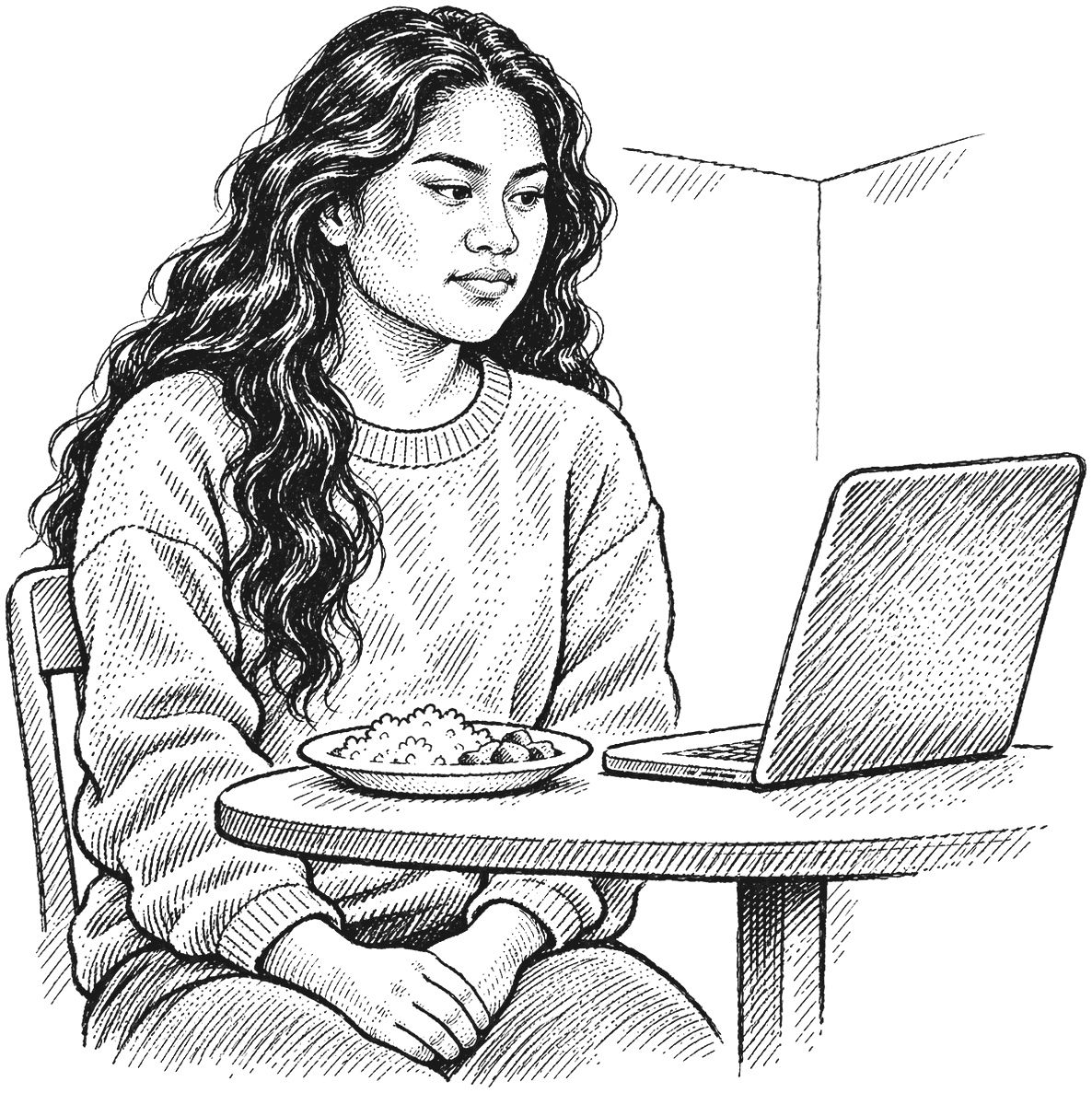
It is a weeknight, and a young woman eats dinner alone again in the flat she moved into for university. A notice on the university mailing list offers a half-hour online study that pays real money. Partway through, the screen gives her 10 units and asks how many of them to hand to a stranger she will never meet.
Gabriele Bellucci and Soyoung Park, researchers who study how people make social decisions, wanted to know whether people who feel lonely trust others more, or less. In their studies, the answer was both. Lonelier people expected less of other people, but they handed more of their money to a stranger.
The game
In the first study, 209 young adults, most in their early twenties, answered a notice on a university mailing list and played online. Whatever they earned in the game was converted into real money and paid to them as a bonus.
The game they played was typical of trust studies. Each player started with 10 units and could send any part of it to an anonymous partner. Whatever they sent was tripled on the way, so 10 units sent became 30 in the partner’s hands. Then the partner decided how much to send back, and could keep all 30. Sending was a bet that a stranger would share, with nothing to stop the stranger from keeping everything.
Some of what people send in that game is plain generosity, so everyone also played a second game. They got another 10 units and chose how much to simply give away, with nothing multiplied and nothing coming back. The researchers counted as trust only what a player sent in the first game beyond what they gave away in the second.

Players also rated statements such as ‘People are around me but not with me’, which measured how lonely they felt, and ‘Most people are trustworthy’, which measured what they expected of others.
What they found
The lonelier the player, the more they trusted the stranger with their money. The lonelier the player, the less they expected of people in general. Both links held with happiness, self-esteem, age, sex, social class, relationship status, and living alone taken into account.
It was not generosity in disguise. When nothing could come back, lonelier players gave away no more than anyone else, and if anything a little less. The extra money went out in the game where a stranger had the chance to send some back.
A second group of 219 adults, recruited online and a few years older on average, played the same two games. The same pairing appeared: more trust in the stranger, lower expectations of people, and a wider gap between the two the lonelier people felt.
For the student eating dinner alone, the pattern suggests she’d send more of her 10 units than a less lonely classmate would, while expecting less from the stranger who received them.
Two pulls at once
The authors read the result as loneliness pulling two ways. It can push people toward connection, which shows up as reaching out with money. It can also make people wary, which shows up as expecting little. They suggest lonelier players may also have been trying to show a stranger that they themselves could be trusted.
Personality told a different story. More outgoing people were less lonely and expected more of others, but sent less to the stranger. For them, expectations ran ahead of what they were willing to risk.
What This Could Mean at Your Desk
The student eating dinner alone is not your client. But advisors meet loneliness at every age: a widow in the first year after her husband’s death, a founder who has just sold the company, a retiree whose days no longer fill themselves. The pattern in the game suggests someone like that may hand over trust faster than their own doubts about people would predict.
Slow down the fast yes. A client who agrees quickly while voicing doubts about people in general may be showing the gap this study measured. Give them time: a second meeting before a large move, a summary in writing, and an invitation to bring someone they trust.
Watch for the trust they extend to others. The players sent money to a stranger with no way to get it back. A lonely client may do the same outside your office, with a new friend, a cold caller, or someone met online. Ask who else is asking them for money, and suggest naming a trusted contact on the account.
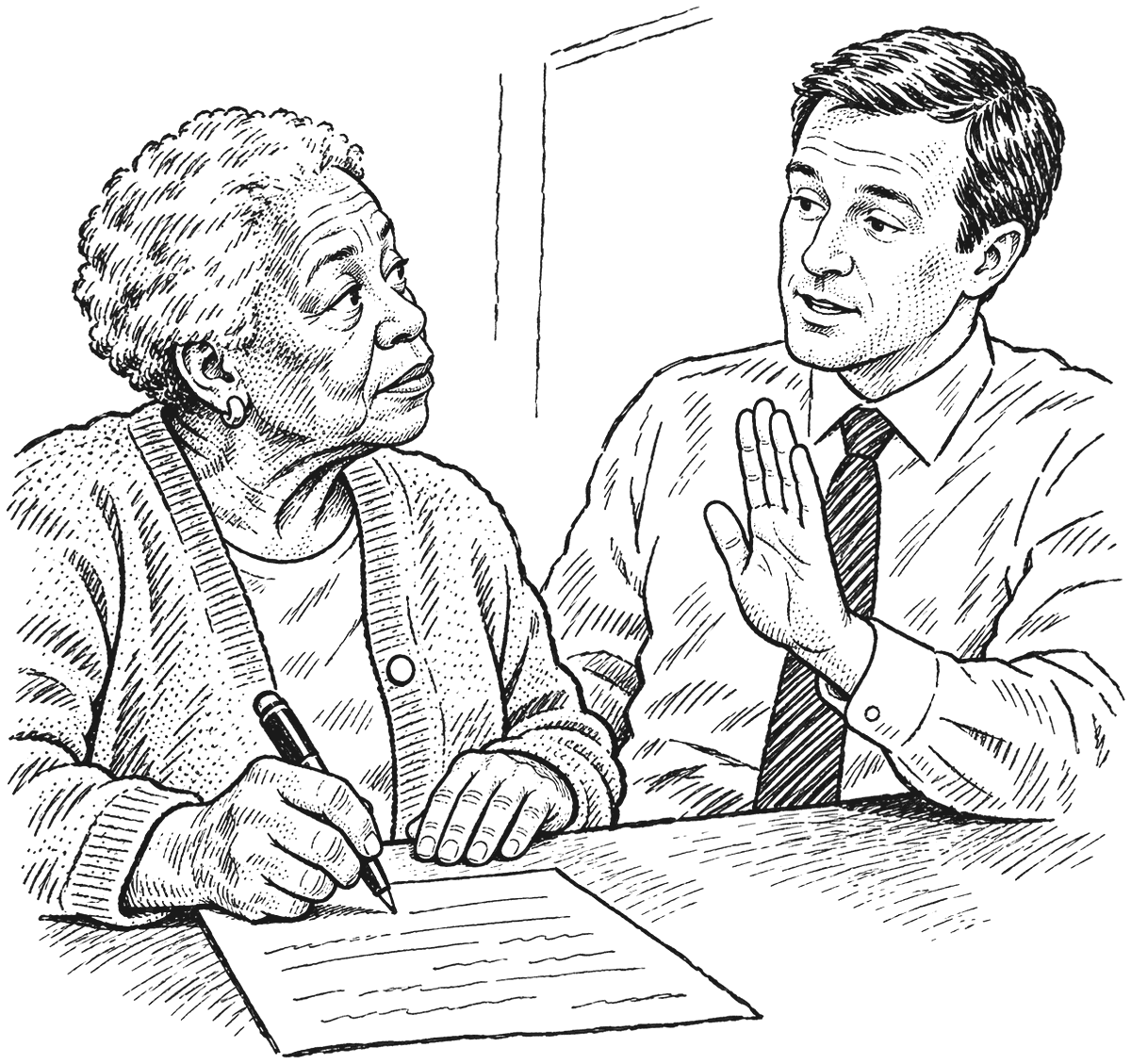
Earn the expectation, not just the handover. Lonelier players expected less of people even as they sent more. A client handing you an account is not the same as a client believing you will do right by them. Steady, specific follow-through may be how the belief catches up.
The bottom line
Young adults who felt lonelier sent more money to an anonymous stranger in a real-money game, beyond what plain generosity explained, while expecting less of people in general. The same pairing appeared in two separate groups.
Older Adults Whose Children Helped With Online Care Trusted Internet Doctors More
A survey of 958 adults aged 60 and over in China found that those whose children encouraged them to seek care online, and helped when it went wrong, trusted doctors on the internet more. That trust was one of the routes from the children’s help to the parents’ willingness to use online care.
Jin, H., & Qu, Y. (2025). Association between intergenerational support, technology perception and trust, and intention to seek medical care on the internet among Chinese older adults: Cross-sectional questionnaire study. Journal of Medical Internet Research, 27, e65065. Open access: doi:10.2196/65065
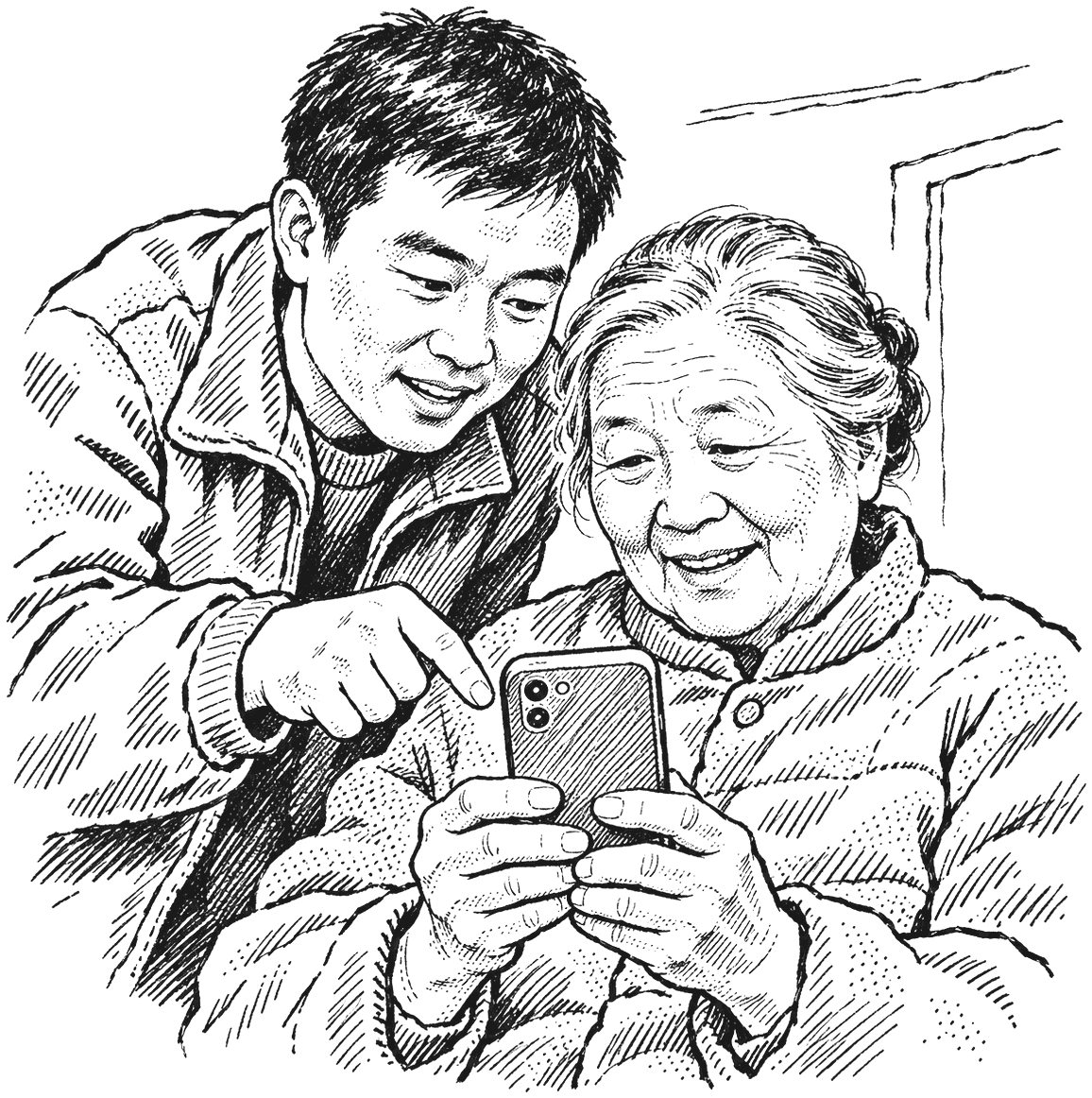
In a village in Hunan, a woman in her late sixties has had a cough for weeks, and the county hospital is a long bus ride away. Her son, home for the weekend, opens a health app on her phone, books a video consultation, and shows her where to tap when the doctor calls. The doctor is a stranger on a screen.
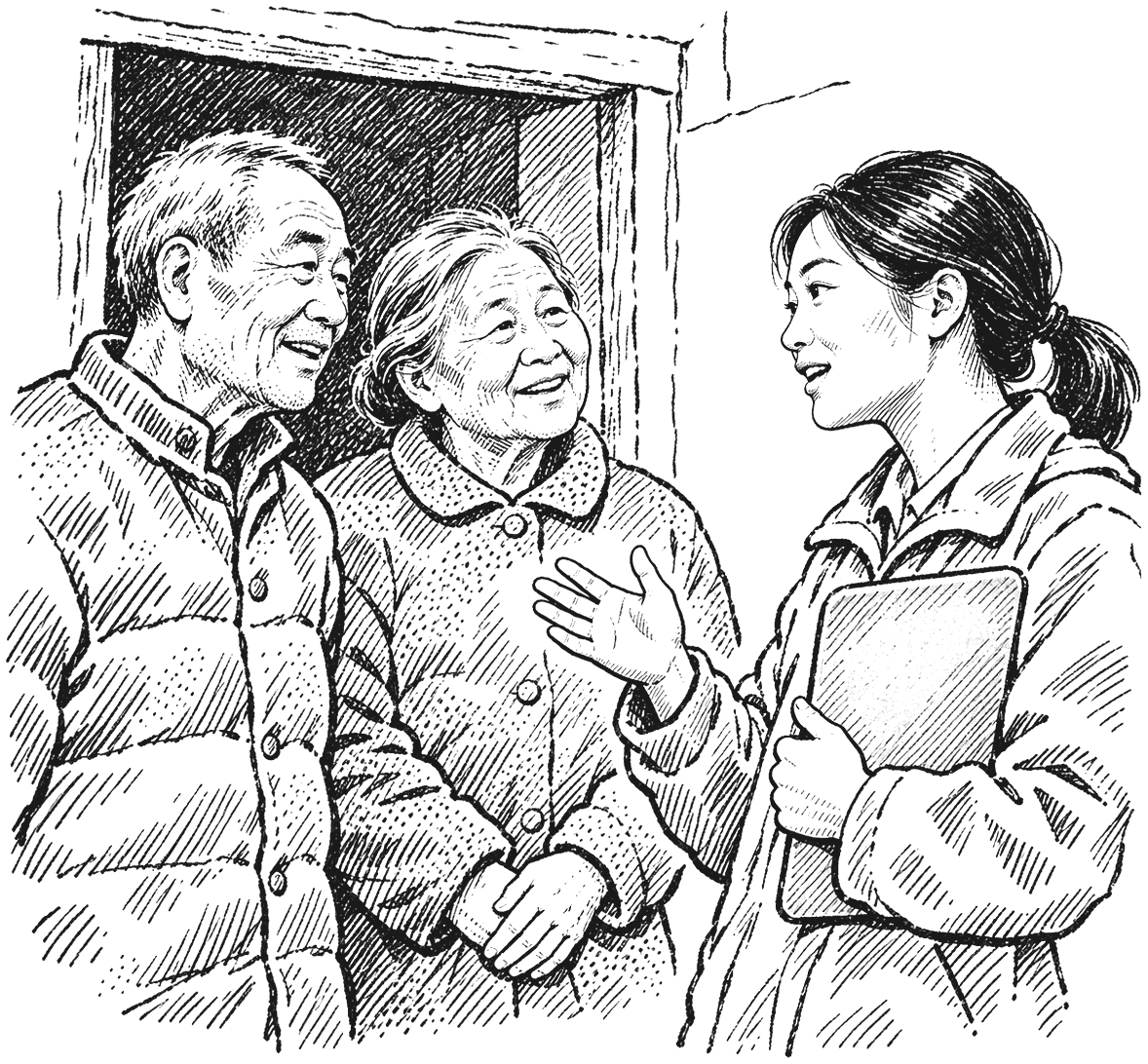
Hengjiang Jin and Ying Qu, researchers at Chongqing University’s School of Journalism, asked 958 older adults in China about moments like that one. They wanted to know what was tied to an older person’s trust in doctors they meet over the internet, and whether that trust lined up with a willingness to use them.
The survey
In March 2024, the researchers reached people aged 60 and over in Chongqing, Hunan, Guizhou, Zhejiang, and other provinces. Some answered a questionnaire shared in WeChat groups. Others were visited at home by the research team in communities and villages. Most were between 60 and 75, more than half lived in the countryside, and about half had worked as farmers. The team collected 1,200 questionnaires and kept the 958 that were complete and consistent.
All of them had some experience with the internet. Those answering online were asked to do it with a middle-aged or young relative or friend beside them, to help with the questions.
They rated statements about their children’s help with online care, such as ‘my children help me solve the problem’ when something goes wrong. They rated their trust in the doctors, such as ‘I trust the health advice or tips from doctors on the internet.’ They rated how easy and how useful online care seemed. And they said whether they would turn to the internet the next time they faced a health problem.
What they found
The more their children encouraged and helped them with online care, the more the older adults trusted doctors on the internet. Finding online care easy to use and finding it useful each lined up with more trust too, by slightly smaller amounts.
Trust, in turn, was tied to willingness. Those who trusted the doctors more said they were more ready to seek care online, and trust was one of the routes linking the children’s help to that readiness. About a ninth of the link ran through trust. Most of the rest ran directly from the help to the readiness. People who looked up health information online on their own were also more ready to seek care there.
The children’s help went further with parents who were already comfortable finding health information online. For them, the link between help and trust was stronger.
For the woman in Hunan, the pattern suggests her son’s help lined up with two things at once: an easier time with the app, and more confidence in the doctor on the screen.
Why help from family counts
The authors point out that when children explain how to register, log in, and book an appointment, they are also showing concern for a parent’s health. They read the help as both practical and emotional, and as easing older adults’ fear of the technology.
The survey did not ask whether children recommended a particular doctor. It asked whether they encouraged the parent to try online care and helped when it went wrong. That help was tied to more trust in online doctors as a group.
What This Could Mean at Your Desk
Aging clients meet your firm more and more through screens: the portal, the video review, the electronic signature. Many of them have a son or daughter who already helps with the phone, the way the woman in Hunan does. The study suggests that kind of help could be tied to more than ease of use.
Invite the helper in, with the client’s permission. Ask an older client whether a son, daughter, or grandchild helps them with apps, and whether they would like that person at the first video meeting or the portal setup. Put the arrangement in writing with the client’s consent.
Make the first session a guided one. In the survey, help when something went wrong was part of what the children gave. Offer a walk-through call for the first login, and a named person to call when a password fails.
Keep the client at the center. The help in this study was help for the parent to act, from encouragement to fixing problems. Speak to the client first, confirm instructions with the client, and keep the account owner’s own voice on every decision. If the helper is also an heir, that line matters all the more.
The bottom line
Among 958 adults aged 60 and over in China, those whose children encouraged and helped them with online health care trusted internet doctors more, and that trust was one of the routes from the children’s help to their willingness to seek care online.
Going From Never to Weekly Services Was Tied to 9 Points More Trust in Most People
A British survey that interviewed the same people for years found that going from never attending religious services to attending every week was tied to a 9 percentage point higher chance of saying most people can be trusted. It was also tied to more volunteering.
Aksoy, O., & Wiertz, D. (2024). The impact of religious involvement on trust, volunteering, and perceived cooperativeness: Evidence from two British panels. European Sociological Review, 40(1), 143-159. Open access: doi:10.1093/esr/jcad024
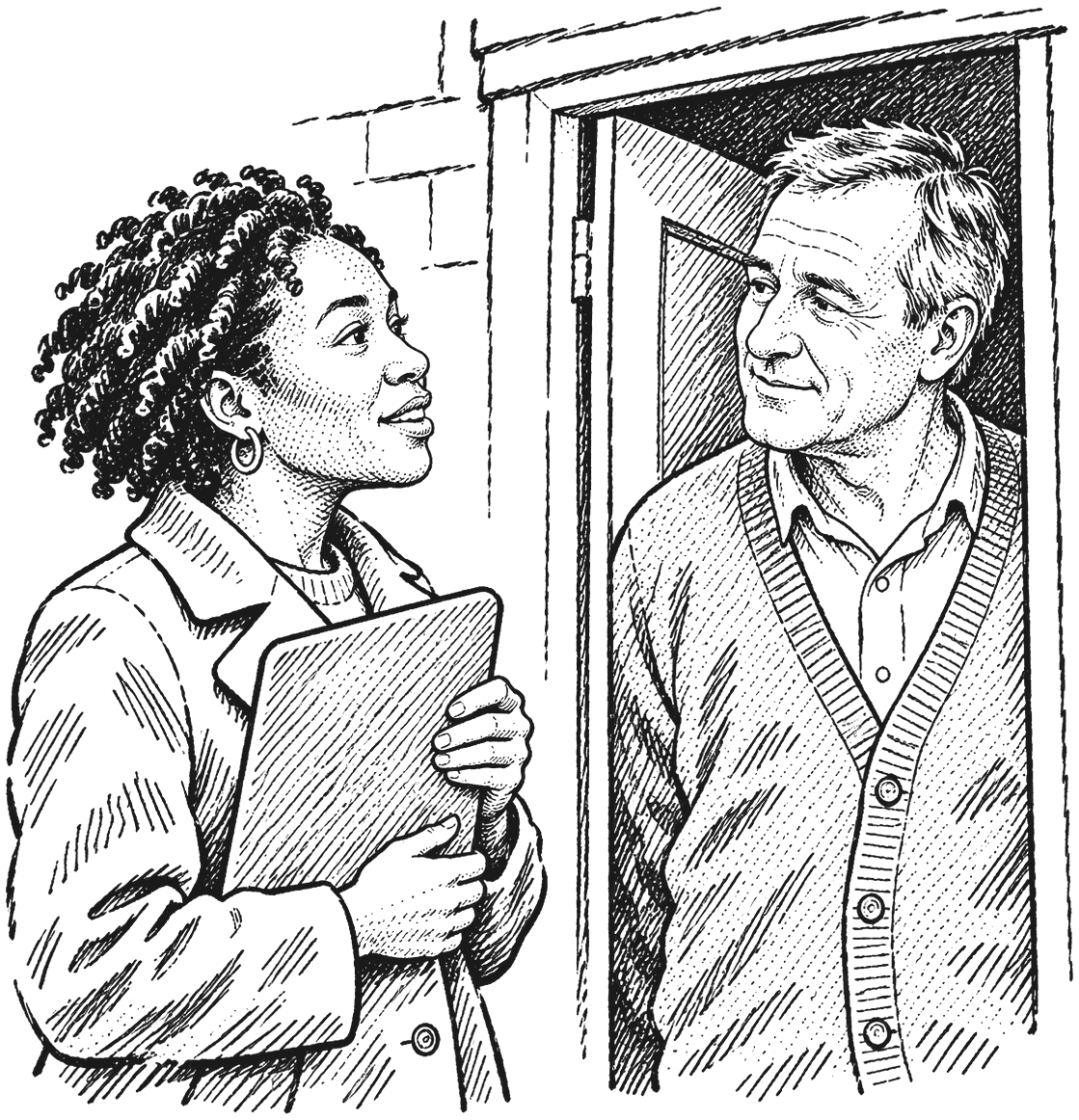
Every year, an interviewer knocks on the same door in a British town and asks the same questions. One of them has been asked in surveys for decades: whether most people can be trusted, or whether you can’t be too careful in dealing with people. When the visit is over, the interviewer notes how cooperative the person at the door was.
Ozan Aksoy and Dingeman Wiertz, sociologists at University College London, used years of those visits to test an old question. Do people who take part in religious services come to trust people in general more, or does their trust stay among their own? Alexis de Tocqueville argued nearly two centuries ago that religion was a vital source of trust and civic life. The research since then had pointed both ways.
Following the same people
The British Household Panel Survey interviewed the same households every year from 1991 to 2009. The trust question was asked in six of those years. In ten of them, people said how often they attended religious services: practically never, at least once a year, at least once a month, or at least once a week. The trust analysis covered 25,921 people.
Comparing churchgoers with people who stay home runs into an obvious problem: someone who attends every week may have been more trusting to begin with. So the researchers compared each person with themselves. They asked whether a person’s trust shifted after that same person’s attendance changed, and they allowed for trust shaping attendance too. The result held after accounting for changes in health, marriage, work, home, and how often people saw friends and neighbors.

Attendance did change. Of people who went at least monthly, about one in seven went more often by the next interview, and two in five went less often. Never and weekly were the steadiest patterns.
What they found
Going from never attending to attending every week was tied to a 9 percentage point higher chance of saying most people can be trusted. Across the survey, a little more than one answer in three was that most people can be trusted.
The same move was tied to more unpaid volunteer work, by 3 points, and to interviewers rating people as more cooperative, by 2 points. That last measure came from the interviewer, a stranger at the door, not from the person answering.
The authors called the effects ‘modest’ but ‘not negligible’. Because they measured change within each person, they note that the differences between people who attend and people who do not are likely larger.
For the person behind that door, the question was the same every year. What shifted alongside the answer was whether, in the years before, they had been going to services every week.
What changed with attendance
The researchers also looked at how much difference people said religion made to their lives, and at whether they considered themselves part of a religion at all. Across the outcomes they studied, both tracked smaller gains than attending did, and those gains faded once attendance was taken into account.
The authors read this as a sign that the gains travel mainly through the social side of religious life: the norms a community keeps and the ties people build by worshipping together. The gains looked much the same whether or not people’s neighbors shared their faith.
What This Could Mean at Your Desk
This study is about religious services, and many clients do not attend any. The part that travels is the showing up: regular time with the same people, week after week, was tied to more trust in people in general. An advisor can take that seriously without taking any position on faith.
Ask about the communities a client shows up for. A congregation, a rowing club, a nonprofit board, a weekly volunteer shift. Where a client spends regular time tells you who is around them and what they care about, and it’s a natural place to start a conversation about giving.
Treat those commitments as part of the plan. Many clients give to the places they attend, serve on their boards, or want to leave them something. Build those commitments into the plan as seriously as the client does.

Show up on a schedule yourself. The gains in this study tracked regular attendance, not a single visit, and the interviewer came back every year with the same question. A steady rhythm of reviews and calls, kept for years, is closer to that pattern than a single grand gesture. Clients notice when the call comes on the day you said it would.
The bottom line
Among British adults interviewed year after year from 1991 to 2009, going from never attending religious services to attending every week was tied to a 9 percentage point higher chance of saying most people can be trusted.
The Trust Times is a running collection of independent, peer-reviewed research on how trust is built. Each issue distills a handful of studies into plain language, with a practical note on what it means in practice.