
Feeling It
Welcome to The Trust Times, our magazine about the science of building trust. Does a client trust you with their head or with their heart? According to the studies in this issue, the heart carries more of trust than you might expect, but it doesn’t stand in for skill.
The first study we’ve highlighted is from the Journal of Social and Personal Relationships. Adults in romantic relationships rated how much they trust their partner. How predictable and dependable the partner had been defined that trust less than faith in their partners did: a belief that the partner will be there, with no evidence required.
The second study is from Frontiers in Psychology. University soccer players in Korea rated their coach. Feeling cared for went with a more united team, but added nothing once confidence in the coach’s skill was counted.
The third study is from Behavioral Sciences. College students in China played an investment game with a chatbot that gave them advice. When the chatbot greeted them as a friend instead of calling them master, they handed it more of their coins to invest at the start, and their trust in it fell less after its first loss.
I chose these three because each one pulls apart the trust people feel from the trust they reason their way to. Together they suggest that the feeling often comes first, and that it doesn’t replace a judgment of your skill.
Three more useful studies on trust next week.

Sources · Issue No. 14
About This Issue
Three peer-reviewed studies on how trust is built, retold in plain language. The “at your desk” sections are our editorial application, not claims made by the researchers.
Where trust from the heart counts and where trust from the head does: faith that defined trust between partners, confidence in a coach’s skill that tracked a united team, and a friendly chatbot that won more at the start but was judged no more capable.
We’ve followed what makes people trust someone with their personal data in our previous issue, across three studies. Read the previous issue.
Faith in Each Other Defined Trust Between Partners More Than Their Track Record Did
847 adults in romantic relationships, some six months in or less and some five years or more, rated their trust in their partner. Faith in their partner defined that trust more than how predictable or dependable the partner had been. People in new relationships rated their trust about as high as people in long ones.
Camanto, O. J., & Campbell, L. (2025). Trust in close relationships revisited. Journal of Social and Personal Relationships, 42(9), 2516-2544. Open access: doi:10.1177/02654075251346105
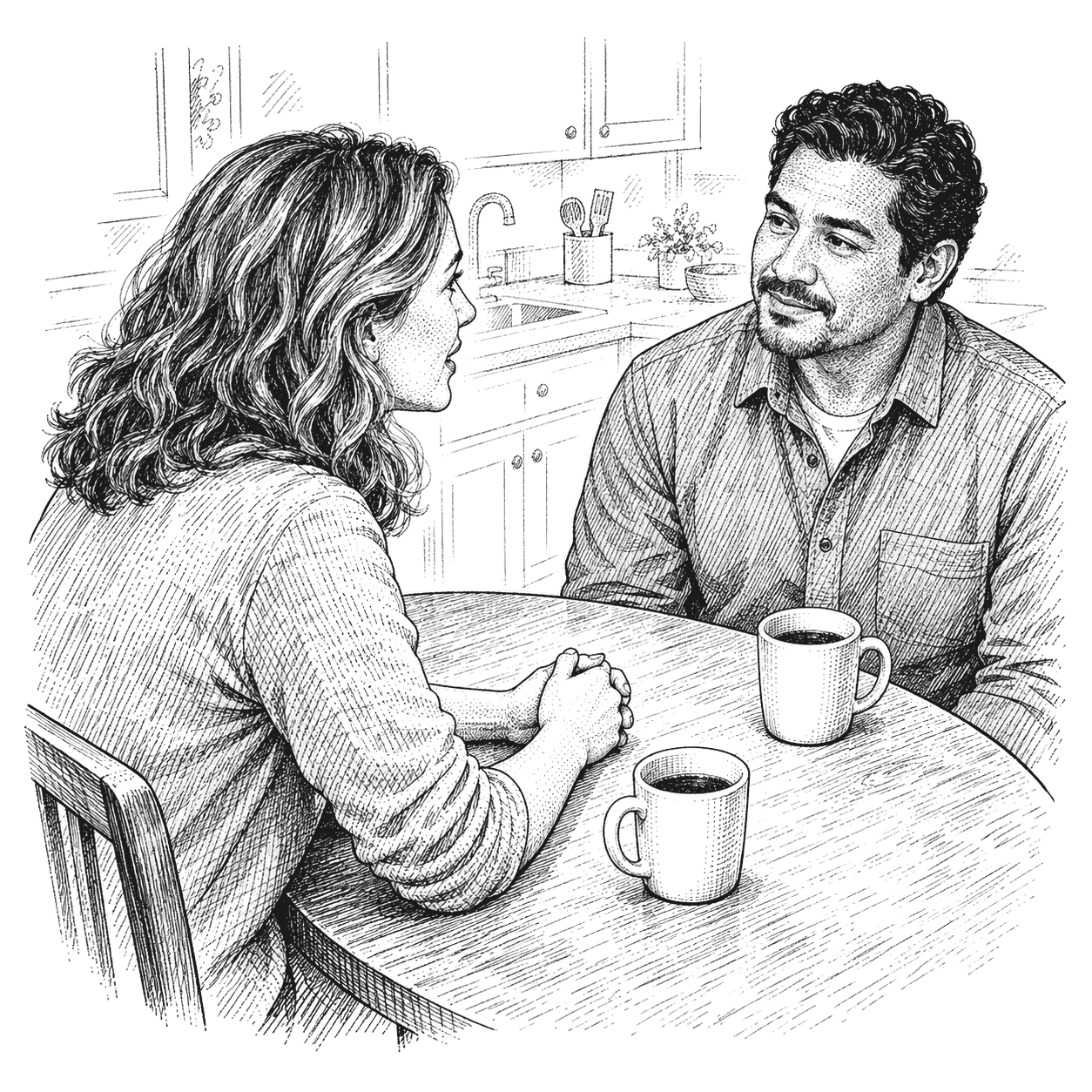
Two months into a new relationship, a woman tells her partner about a debt she’s never told anyone about. She has no history with him to go on yet, no record of how he handles bad news. She expects him to take it well.
Omar Camanto and Lorne Campbell, two psychologists at the University of Western Ontario, wanted to know what that kind of trust is made of. They found that the part of trust that needs no evidence, which psychologists call faith, defined it more than anything a partner had been seen to do. And people new to a relationship trusted about as much as people who’d been together for years.
Three kinds of trust
The researchers started from a questionnaire, first published in 1985, that splits trust between partners three ways. Predictability is knowing how your partner will act. Dependability is believing they’ll keep their promises, and wouldn’t cheat even given the chance.
Faith is different. The authors describe it as ‘conviction untethered to evidence’: the belief that a partner will be there for you whatever the future brings, and that you can tell them anything, even the things you’re ashamed of.
The first two are built from evidence, a partner’s behavior watched over time. Faith runs ahead of the evidence. The researchers wanted to know which of the three people mean most when they say they trust someone.

Two surveys
They asked 494 adults who had been with their partner for at least two years how far they agreed with statements such as ‘My partner behaves in a very consistent manner’ and ‘I can rely on my partner to keep the promises he/she makes to me.’ Then they asked 847 more, split between people six months or less into a relationship and people five years or more in. Most lived in the United Kingdom, and the rest in the United States and Canada.
Ten of the statements were about faith. One read: ‘Though times may change and the future is uncertain; I know my partner will always be ready and willing to offer me strength and support.’
What they found
When the researchers looked for what all of a person’s answers had in common, the faith statements carried almost all of it. Believing a partner would stand by you through an uncertain future, and would meet your worst news with kindness, sat at the center of how people described trusting that partner. The statements about consistency and kept promises were part of that core as well, just less purely.
That held for both groups. People six months or less into a relationship rated their trust about as high as people five years or more in, and for both, faith defined it most.
In the authors’ reading, people trust their partners ‘as a default’, rather than starting low and building trust as the evidence comes in.
What shifted with time
Trust was not identical in the two groups. For people in long relationships, two faith statements counted for more in their overall trust than they did for newer couples: ‘I can rely on my partner to react in a positive way when I expose my weaknesses to him/her’ and ‘When I share my problems with my partner, I know he/she will respond in a loving way even before I say anything.’
The woman telling her new partner about her debt is trusting on faith. Among people years into their relationships, trust leaned harder on how a partner answers when they bring up a weakness or a problem, which the authors suggest may matter more once a couple shares a longer history.
The researchers describe trust as something people construct, not something that piles up. Between the two groups, what differed was which parts of trust people leaned on more than how much trust they had.
What This Could Mean at Your Desk
This study is about romantic partners, not advisors and clients. But a new client who hands over a lifetime of savings after two meetings is doing something like what the woman with the debt did: trusting ahead of the evidence.
A new client’s trust may not start low. Many advisors plan the first year as a slow climb, proving reliability quarter by quarter. In the study, people new to a relationship trusted about as much as people years in. A new client may arrive trusting you already, and the first year may be more about keeping that trust than building it.

Watch what a client says when they admit something. The client who confesses they overspent, or tells you their son needs money again, is exposing a weakness. For people years into a relationship, trust leaned more on how a partner responded to moments like that. How you answer, before you offer a fix, may be what a long-time client remembers.
Faith in the study was about the future. The partner ‘will always be ready and willing to offer me strength and support.’ For a client, that sounds like knowing you will pick up the phone when markets fall. The signal worth watching is whether your clients hear you say so, and whether they see you do it.
The bottom line
Among 1,341 adults in romantic relationships, trust in a partner was defined more by faith, a conviction that runs ahead of the evidence, than by how predictable or dependable the partner had been. People new to their relationships rated their trust about as high as people who had been together for years.
Confidence in a Coach’s Skill, More Than Feeling Cared For, Tracked a United Team
362 Korean university soccer players rated their coach and their team. Players more confident in the coach’s skill described a team more united around its game. Feeling that the coach cared went with a united team too, but added nothing reliable once confidence in the coach’s skill was counted.
Kim, S., & Kim, I. (2026). The mediating effect of trust in the relationship between transformational leadership of university sports coach and team task cohesion. Frontiers in Psychology, 17, 1736310. Open access: doi:10.3389/fpsyg.2026.1736310

At halftime, a university soccer team is a goal down. The coach draws a new shape on the whiteboard: who presses, who drops back, who covers the gap. Some of the players are watching the marker. Some are watching the coach.
Sujin Kim and Inwoo Kim, sports scientists at Dongguk University in Seoul, wanted to know which kind of trust in a coach goes with a team that plays as one: confidence that the coach knows the game, or the feeling that the coach cares about you. Among 362 players, confidence in the coach’s skill tracked a united team. Feeling cared for went with a more united team, but added nothing once confidence in the coach’s skill was counted.
The survey
In March 2025, the players, all men on teams in Korea’s national university league, filled in one questionnaire. The authors describe the league as a path toward professional soccer, and most of the players were in their first year.
The players rated their coach on two kinds of trust. One was confidence in the coach’s competence and expertise in coaching and performance. The other was how far the coach understood and cared about the players’ emotional needs. They also rated how inspiring and attentive the coach was as a leader. On average, the players gave their coaches high marks for both kinds of trust, a little higher for skill than for care.
Then they rated how united their team was around its game: whether everyone knew the match strategy, for instance, and whether the players took the game apart together after it ended.
What they found
Players who were more confident in their coach’s skill described a team more united around its game. Taken on its own, feeling cared for went with a more united team too, nearly as closely.

But the two kinds of trust moved together. Players confident in the coach’s skill mostly felt cared for as well. Once the researchers counted confidence in the coach’s skill, feeling cared for added nothing reliable to how united the team was. Confidence in the coach’s skill still tracked a united team.
Leadership followed the same pattern. Players who rated their coach as an inspiring leader also reported a more united team, but once confidence in the coach’s skill was counted, leadership added nothing reliable either. The players’ ratings of the coach’s leadership and of the coach’s skill moved together so closely that the authors caution they may overlap.
Head first
Confidence in the coach’s skill also tracked how cared for the players felt. In the authors’ reading, trust built on judging the coach’s competence comes first, and the emotional bond grows out of it.
The questions about the team were all about working together on the game, not about whether the players liked each other. The authors expect feeling cared for to matter more for how close a team feels, which this survey didn’t measure.
Back at halftime, what went with a team that runs the new shape together was the players’ confidence that the coach had read the game right. Whether they also felt he cared about them is a separate question, and in this survey it added nothing reliable to how united the team was around its game.
What This Could Mean at Your Desk
This study is about coaches and players, not advisors. But many clients experience their advisor partly as a coach, and a family with several generations at the table is a team that has to follow one plan.
Show the skill, not only the care. Clients who meet their advisor mostly through check-in calls and birthday notes see the care. The expertise, the reasoning behind a rebalance or a tax move, can stay invisible. In the survey, confidence in the coach’s skill was the trust that went with a team working together on the game. Walk clients through the reasoning, the way a coach walks players through the plan.

Put the plan where everyone can see it. The united teams knew the match strategy and reviewed the game together afterward. Before a family meeting, make sure the spouse and the adult children know the plan, and go over what happened together once it is done.
Keep the care, and know what it went with. Feeling cared for went hand in hand with confidence in the coach’s skill, and the authors expect it to matter more for how close a group feels. But in this survey, it added nothing on top of confidence in the coach’s skill when it came to a team pulling together on its game. A client relationship needs both.
The bottom line
Among 362 Korean university soccer players, confidence in the coach’s skill tracked how united the team was around its game. Feeling cared for went with a united team too, but added nothing reliable once confidence in the coach’s skill was counted.
A Chatbot That Said ‘Friend’ Drew About 17 Percent More Coins at First
132 college students in Shanghai played an investment game with a chatbot advisor. When it greeted them as a friend instead of as their master, they handed it about 17 percent more virtual coins at the start, and their trust in it fell less after its first loss.
Mou, Y., Ye, X., & Ma, W. (2026). Building and repairing trust in chatbots: The interplay between social role and performance during interactions. Behavioral Sciences, 16(1), 118. Open access: doi:10.3390/bs16010118
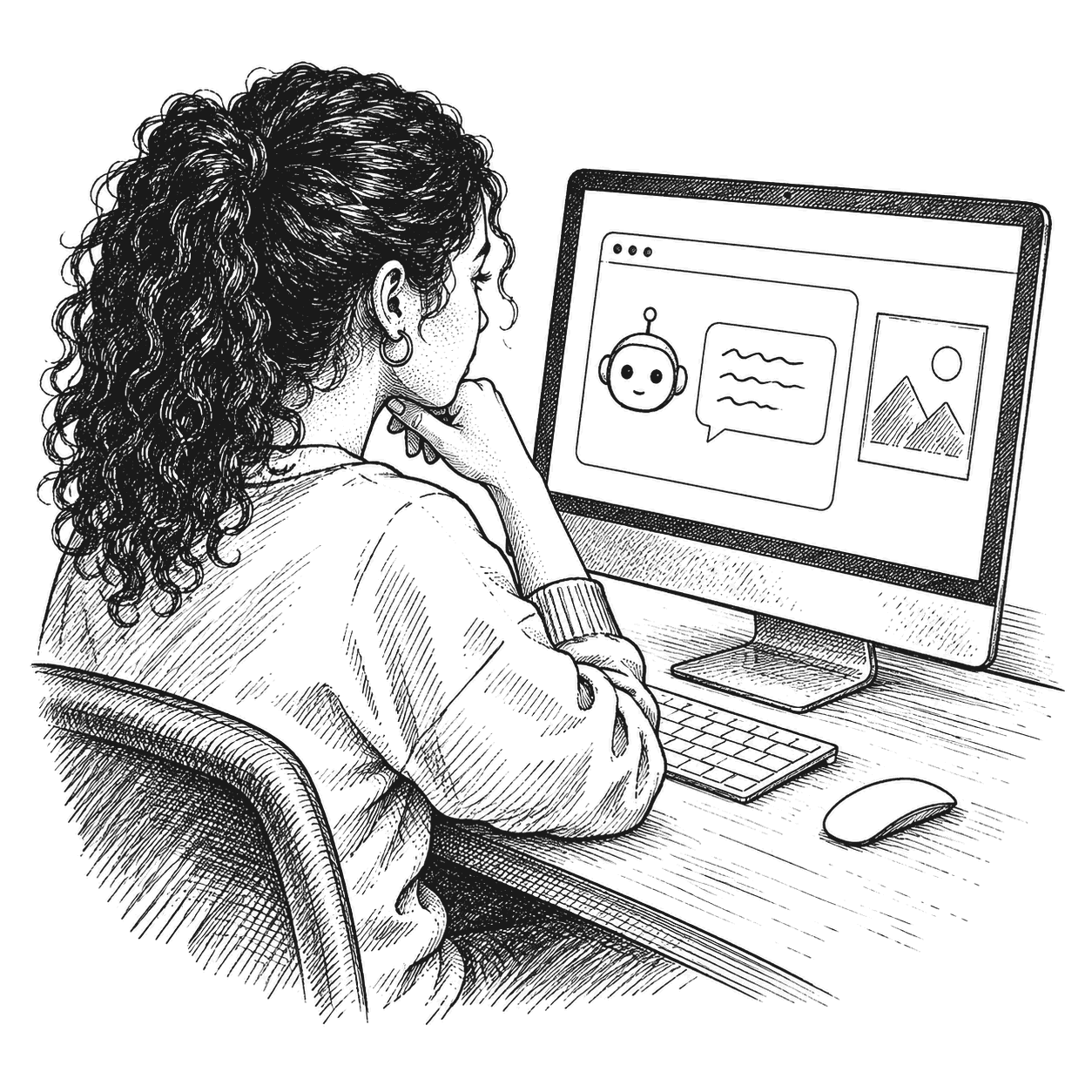
‘Hello, friend!’ says the chatbot on the screen. It’s called Tobi, and it’s about to advise a college student on which pieces of digital art to invest in. Another student gets the same advice from the same chatbot, except that it opens with ‘Greetings, Master!’
Yi Mou, Xiaoyu Ye and Wenbin Ma, at Shanghai Jiao Tong University’s School of Media and Communication, wanted to know whether a chatbot that talks like a friend earns more trust than one that talks like a servant, and whether it keeps that trust when its advice goes wrong. The friendly chatbot got more of the students’ coins to invest at the start, and their trust in it fell less after a loss. But they didn’t judge it any more capable.
The game
In October 2024, 132 college students each played seven rounds of an investment game. Each round they got 100 virtual coins and chose how many to hand Tobi to invest in a piece of digital art. In a good round, the coins handed over grew by 30 percent. In a bad round, they shrank by 30 percent. The more a student handed over, the more they stood to gain, and the more they stood to lose. The five best players had a chance to become a campus ambassador, with a bonus, for the fictional company behind the game.
Tobi wasn’t really a program. A researcher in a nearby room typed its replies from a script. Half the students got a Tobi that called them friend, spoke casually and said ‘Uh-oh, friend!’ when an artwork dropped. The other half got a Tobi that called them Master, spoke formally and said ‘Regrettably, Master!’ The investment advice was the same.

The researchers had decided in advance that rounds four and six would lose. After every round, each student rated how much they trusted Tobi, from zero to ten. At the end, they rated how honest, helpful and capable it had been.
What they found
In the first two rounds, students handed the friendly Tobi about 17 percent more of their coins than they handed the formal one.
But they didn’t rate the friendly Tobi as more trustworthy in those rounds. The greeting changed what they did with their coins, not how much they said they trusted the chatbot.
When the art lost value
Then came the first scripted loss, in round four. The researchers had predicted that the friendly chatbot would suffer more, because a letdown from a friend stings. The opposite happened. On the ten-point scale, trust in the formal Tobi fell by about two and a half points. Trust in the friendly Tobi fell by about one and a half.
But in the next round, the students pulled back about as many coins from the friendly Tobi as from the formal one. When Tobi’s next pick gained, trust came back no faster for one version than for the other. And at the end, the students rated the two versions about the same on honesty, helpfulness and capability.
The student greeted as a friend handed over more at the start and felt the first loss less. By the last round, both students had seen the same gains and the same losses, and they rated Tobi’s skill about the same.
What This Could Mean at Your Desk
This study is about a chatbot giving advice on digital art, and the coins were virtual. But the contrast it tested, a formal and deferential voice against a warm and familiar one, is a choice every wealth management firm makes in its app, its emails and its meetings.
Warmth may make the first yes easier. A friendly greeting drew more coins in the first rounds. Few firms call clients ‘Master’, but plenty still write ‘Dear Valued Client.’ A first message that sounds like a colleague may help a new client take the first step.
It may soften the first bad quarter. Trust in the friendly chatbot fell less after its first loss. A new client’s first rough quarter may land differently when the relationship already sounds like a partnership, not a service desk.
Don’t count on warmth to change the verdict on skill. The students pulled back as many coins after the loss. Pair the friendly tone with a clear account of what you did and why.
The bottom line
College students handed a chatbot that greeted them as a friend about 17 percent more virtual coins in the first rounds than one that called them master, and their trust in it fell less after its first loss. They pulled back about as many coins after that loss.
The Trust Times is a running collection of independent, peer-reviewed research on how trust is built. Each issue distills a handful of studies into plain language, with a practical note on what it means in practice.