
Sharing It
Welcome to The Trust Times, our magazine about the science of building trust. What makes the people on one team trust each other? According to the studies in this issue, trust inside a team tracked how its leader treated people and how much room the team was given to decide.
The first study we’ve highlighted is from Frontiers in Psychology. Researchers surveyed hospital teams across Spain. Once trust among teammates was counted, a supervisor’s vision and inspiration had no direct link to the team’s results. What remained was a chain: trust among teammates was higher where supervisors were seen as sincere and respectful, and those teams rated their own work and their care for patients higher.
The second study is from Psychological Reports. Office workers in Malaysia described their teams, their leaders, and their own work. Distrust was measured on its own, not as missing trust. Where a team shared a sense of trust, members trusted each other more and distrusted each other less. People who trusted their teammates said the team talked more openly, and they rated their own work higher.
The third study is from the Journal of Business and Psychology. German teams and their leaders answered surveys a month apart. When teams planned and ran their own work, their leader trusted them more a month later, and gave them more room to decide. The pull ran harder the other way: leaders who handed over room first came to trust their teams more.
I chose these three because the trust a family places in your firm rests on a team, and each study looks at how trust gets built inside one.
Three more great studies on trust next week.

Sources · Issue No. 16
About This Issue
Three peer-reviewed studies on how trust is built, retold in plain language. The “at your desk” sections are our editorial application, not claims made by the researchers.
How trust grows inside the team that serves one family: a supervisor who treats people fairly, a team that talks openly, and a leader who hands over room to decide.
In our previous issue we covered three studies on what people weigh once they believe an expert knows the field. Read the previous issue.
Hospital Teams With Fairer Supervisors Trusted Each Other More and Rated Their Work Higher
In a survey of 1,638 workers in 109 teams at 28 Spanish hospitals, teams that saw their supervisor as sincere, fair, and respectful trusted each other more. Teams with more trust among teammates rated their own work and their service to patients higher.
Olvera, J., Acosta-Antognoni, H., Llorens, S., & Salanova, M. (2024). Sources of trust in the healthcare context. A multilevel relationship with work engagement and organisational outcomes. Frontiers in Psychology, 15, 1438872. Open access: doi:10.3389/fpsyg.2024.1438872
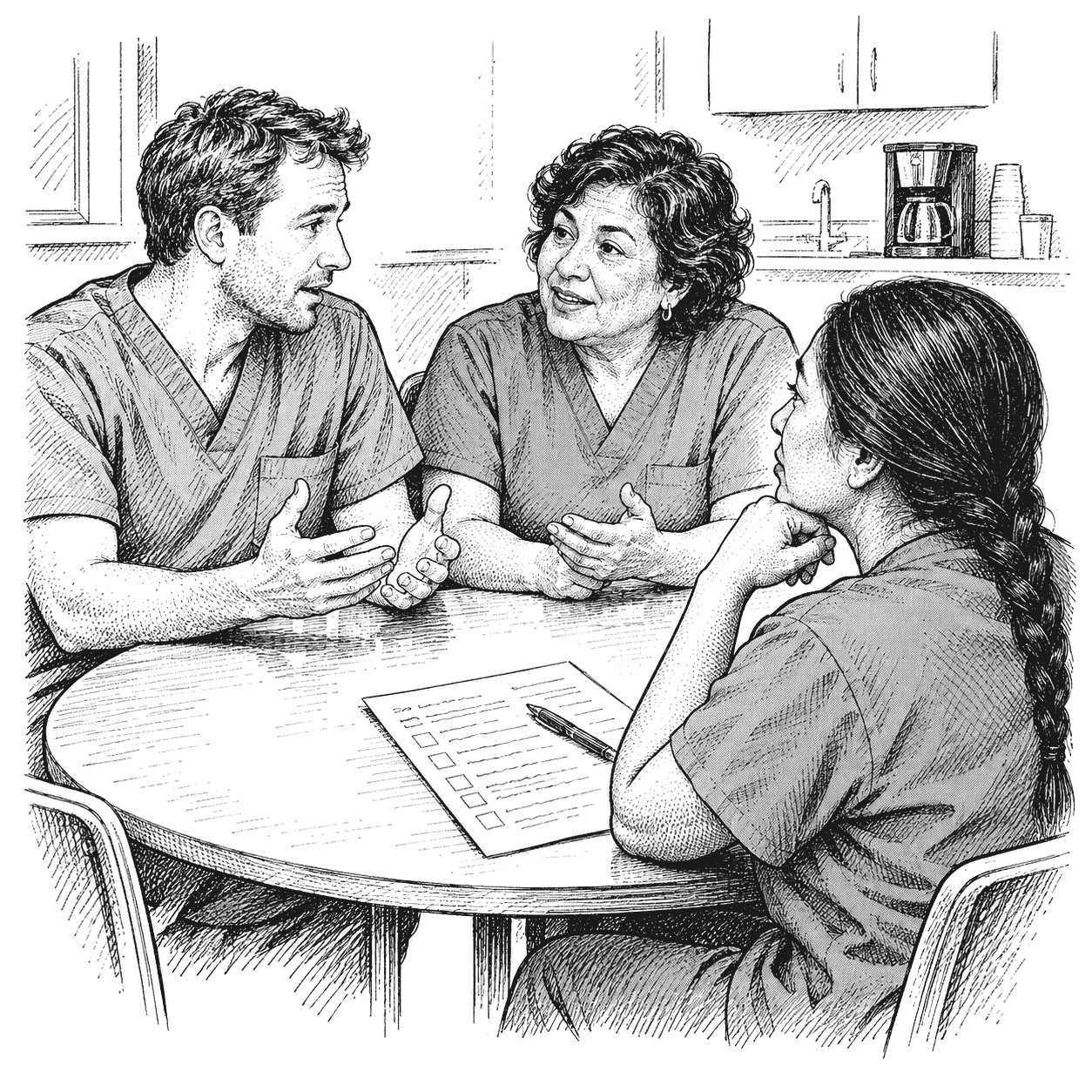
Picture a hospital ward at the start of a shift. The schedule has changed again, and a nurse wants to know why. Her supervisor can sit the team down and explain the decision plainly, or post the new schedule and leave. Either way, the nurses will spend the shift relying on each other.
A team of four researchers led by J. Olvera wanted to know where that reliance on each other comes from. In hospital teams across Spain, they found that trust among teammates was higher where the supervisor treated them fairly and sincerely, and that teams with more of that trust rated their own work higher.
The survey
The researchers surveyed 1,638 hospital workers in 109 teams at 28 hospitals across Spain. Each team shared its work and answered to one supervisor. Most of the workers were women, and all had been in their jobs for at least six months.

Everyone answered with the team in mind. Was their supervisor sincere with them, did the supervisor explain decisions, and did the supervisor treat them with respect? Could people on the team talk freely with each other about problems at work? How well did the team meet its standards, go beyond its job descriptions, and put itself in patients’ shoes? They also rated the supervisor’s inspiring side: a clear vision, encouragement, and praise for good work. The researchers then averaged each team’s answers and compared the teams with each other.
What they found
Teams that saw their supervisor as fair, sincere, and respectful trusted each other more. In the researchers’ model, how fairly the supervisor treated the team lined up with about half of the differences in trust from one team to the next.
Trust among teammates, in turn, lined up with about three quarters of the differences in how teams rated their own work and their service to patients.
Respect showed the closest tie. Across the teams, how appropriately the supervisor treated people tracked trust among teammates a little more closely than how sincerely and fully the supervisor kept them informed.
Inspiration ran through fairness
Teams that found their supervisor inspiring almost always found that supervisor fair too, and teams that rated both highly also rated their own work higher. But once trust among teammates was in the model, neither one had a reliable direct link of its own to those results. In the researchers’ model, the supervisor connected to the team’s results through the trust teammates had in each other.
The researchers also tried the chain in a different order, starting from trust among teammates and running through the supervisor to the team’s results. That version fit the data clearly worse. The authors suggest hospitals could train supervisors in this kind of leadership, and test it by comparing trained teams with teams left as they were.
Back on the ward, that puts weight on the few minutes the supervisor spends explaining the schedule change. In these teams, teammates raised problems with each other more freely where the supervisor was sincere with the group, and teams that spoke up more freely said they served patients better.
What This Could Mean at Your Desk
A family’s affairs are rarely handled by one person. A lead advisor, an associate, a paraplanner, and often an outside accountant and estate attorney all work for the same family. The study suggests the trust among them could track how the person leading them explains decisions and treats them.

Explain the decision to the team, not just the outcome. When you change a family’s allocation or hand the relationship to someone new, tell your associate and paraplanner why, before they hear it from the client. They are in the nurse’s position, asking why the schedule changed. In the hospital teams, trust among the people doing the work was higher where the supervisor was seen as sincere and informative.
Make it easy for the team to raise problems with each other. The trust questions in the study asked whether teammates could talk freely about difficulties at work. A standing few minutes in the weekly team meeting for what is stuck on each family gives the paraplanner a place to say the transfer paperwork is late before the family notices.
Check on the trust inside your team, not only the client’s. In the study, trust among teammates tracked how well a team said it served patients, and the supervisor’s links to that service ran through it. It may be worth asking your team, now and then, whether they can bring a problem to each other freely.
The bottom line
At 28 Spanish hospitals, teams whose supervisors were seen as sincere, fair, and respectful trusted each other more, and teams that trusted each other more rated their own work and their service to patients higher. The supervisor’s links to those results ran through the trust among teammates.
People on High-Trust Teams Reported Talking More Openly and Rated Their Work Higher
343 office employees in 76 Malaysian teams described their team, their leader, and their own work. Where a team shared a sense of trust, its members trusted each other more and distrusted each other less. Teams with more trust talked more openly, and teams that talked more openly rated their own work higher.
Lee, M. C. C., Yeung, Y.-M., & Lin, M.-H. (2025). A multilevel mediational study on relationships between trust climate, leader-member exchange, trust, mistrust, communication and task performance. Psychological Reports. Advance online publication. Open access: doi:10.1177/00332941251390423

Picture a project team of five in an office near Kuala Lumpur. At the weekly meeting, the newest member has spotted a mistake in the plan. Whether she says so out loud is the question this study circles.

Michelle Chin Chin Lee, Yeu-Mynn Yeung, and Mei-Hua Lin surveyed office teams in Malaysia to see how trust inside a team connects to how openly its members talk and how well they say they work. People on teams with a shared sense of trust trusted their teammates more, and those who trusted more said the team talked more openly.
The survey
Between December 2017 and October 2019, 343 full-time office employees in 76 teams at 22 small and mid-sized Malaysian organizations filled in a paper questionnaire, in English and Malay. Teams ranged from three people to eleven.
The authors chose Malaysia partly because, they write, its workplaces put weight on harmony, respect for hierarchy, and indirect communication, and colleagues are often friends as well.
Each person answered questions about the team and about themselves. Did their team members in general trust one another? How good was their working relationship with their team leader? Would they give the team a task that mattered to them without checking up on it? Did they see little match between what the team said it would do and what it did? Did people feel comfortable giving their point of view, and were they willing to listen to others? And how well did they themselves meet deadlines and adapt to new rules?
The researchers treated trust and distrust as two separate things, not two ends of one scale. A person, they note, can hold both at the same time. One distrust question, for example, asked whether thinking about the team brought on anxiety.
What they found
Where a team as a whole agreed that trust ran high, its members trusted their teammates more and distrusted them less. A good working relationship with the team leader showed the same pattern, and it tracked less distrust of teammates more closely than the team’s climate did.
The authors read the leader result as a sign that a good one-to-one relationship with the leader can offset doubts a person already had about the team or the people on it.
People who trusted their teammates more said the team talked more openly. People who distrusted their teammates said it talked less, and rated their own work lower. And people who reported more open talk rated their own work higher.
Open talk carried the link
The researchers’ model traced a chain. Trust and distrust tracked how openly the team talked, and open talk tracked how people rated their own work. Once open talk was counted, distrust had no remaining link to how people rated their own work. Trust kept a smaller direct link of its own.
For the newest member with the mistake in the plan, that chain runs through the meeting room. In teams like hers, what lined up with people rating their work higher was whether they felt comfortable saying what they saw, and whether others were willing to listen.
What This Could Mean at Your Desk
This study measured office colleagues, not clients. But a family’s affairs are often handled by a small team much like the ones surveyed: an advisor, an associate, an accountant, and an estate attorney, each holding a piece of the picture. The newest associate on a family’s account sits where the team member with the mistake in the plan sat.
Ask your team the questions the survey asked. Can people on your team say what they think about a family’s plan? Are they willing to hear each other out? In this study, those questions tracked how well people rated their own work.
Tend each one-to-one working relationship. A good relationship with the team leader tracked less distrust of teammates, more closely than the team’s overall climate did. It may be worth a regular one-on-one with each person who works on a family’s account, not only the group meeting.
Close the gap between what the team says and what it does. Distrust in the study was measured partly by whether people saw little match between what the team said it would do and what it did. A shared list of what the team promised each family, and what got done, puts that gap in plain view.
The bottom line
In 76 Malaysian office teams, teams with a shared climate of trust had more trust and less distrust among teammates. People who trusted their teammates reported more open talk, and people who reported more open talk rated their own work higher.
Leaders Trusted Their Teams More a Month After the Teams Led Themselves
In German teams surveyed three times a month apart, leaders trusted teams that planned and ran their own work more a month later, and trusted teams then got more room to decide. The pull ran more strongly the other way: leaders who gave their teams room came to trust them more.
Klasmeier, K. N., Güntner, A. V., & Schleu, J. E. (2025). Leadership dynamics in teams: The reciprocity of shared and empowering leadership. Journal of Business and Psychology, 40(5), 1171-1187. Open access: doi:10.1007/s10869-025-10008-9

Picture a four-person IT team at a German company. Their manager is away for a week, and the team plans the work, divides the tasks, and sorts out a problem on its own. When the manager comes back, the question is what she makes of it.

Kai Klasmeier, Amelie Güntner, and Joyce Elena Schleu surveyed teams like it three times, about a month apart. When teams led themselves, their leaders trusted them more a month later, and leaders who trusted their teams went on to give them more room to decide. The pull was stronger the other way around.
The survey
The researchers invited 169 teams in German organizations, most of them in IT, health care, and public administration. Every team had a formal leader. The average team had four members, who had worked together for about six years.
Three times, about a month apart, team members and their leaders filled in separate surveys. Team members rated how far the team led itself, with statements such as ‘We as team define and structure our collective work’, counting only their peers and never the leader. They also rated how much room the leader gave them, for example whether the leader considered their ideas even when disagreeing. Leaders rated their trust in the team, with statements such as ‘I can rely on my team.’
Because leaders rated trust and members rated everything else, no single person’s answers supplied both sides of a link.
What they found
Teams that led themselves more were trusted more by their leader a month later. Leaders who trusted their team more then gave it more room to decide the following month. The study tied the two together: a team leading itself was linked to more trust from the leader, and that trust was linked to more room.
The researchers’ reading is that a team leading itself shows its leader a group that is capable, engaged, and pulling toward the same goal, and that leaders respond by sharing more control.
The pull in the other direction was stronger. When team members said their leader had given them more room to decide, the leader trusted them more a month later, and the team led itself more. The authors suggest one reason: the person in charge has more ways to shape the team than the team has to shape the leader.
What didn’t change it
The researchers expected leaders who doubted their own ability to lead to feel threatened by a team that led itself, and to trust it less. The data showed no sign of it. Leaders low in confidence responded to a self-led team much as confident leaders did. The link between a team leading itself and the leader’s trust also held with the team’s performance taken into account.
There was some evidence that performance strengthened the link: a leader’s trust rose more after a team led itself when that team was also doing well. The authors suggest newer leaders in particular can stop carrying every leadership task themselves and let the team take on what the work requires.
For the manager coming back from a week away, the study points both ways. The week the team ran itself went, in these data, with more of her trust a month on. And the stronger pull ran from room to trust: leaders who handed over room came to trust their teams more.
What This Could Mean at Your Desk
In a wealth management firm, the lead advisor on a family usually leads a small team, much like the ones in this study. Your week out of the office is that IT manager’s week away. The family, in turn, decides over time how much room to give that team.
Give the team a piece of the family’s work to run. Let the associate own the annual chase for tax documents, start to finish, including the calls. In the study, teams that took on planning and problem-solving themselves were trusted more by their leader a month later.
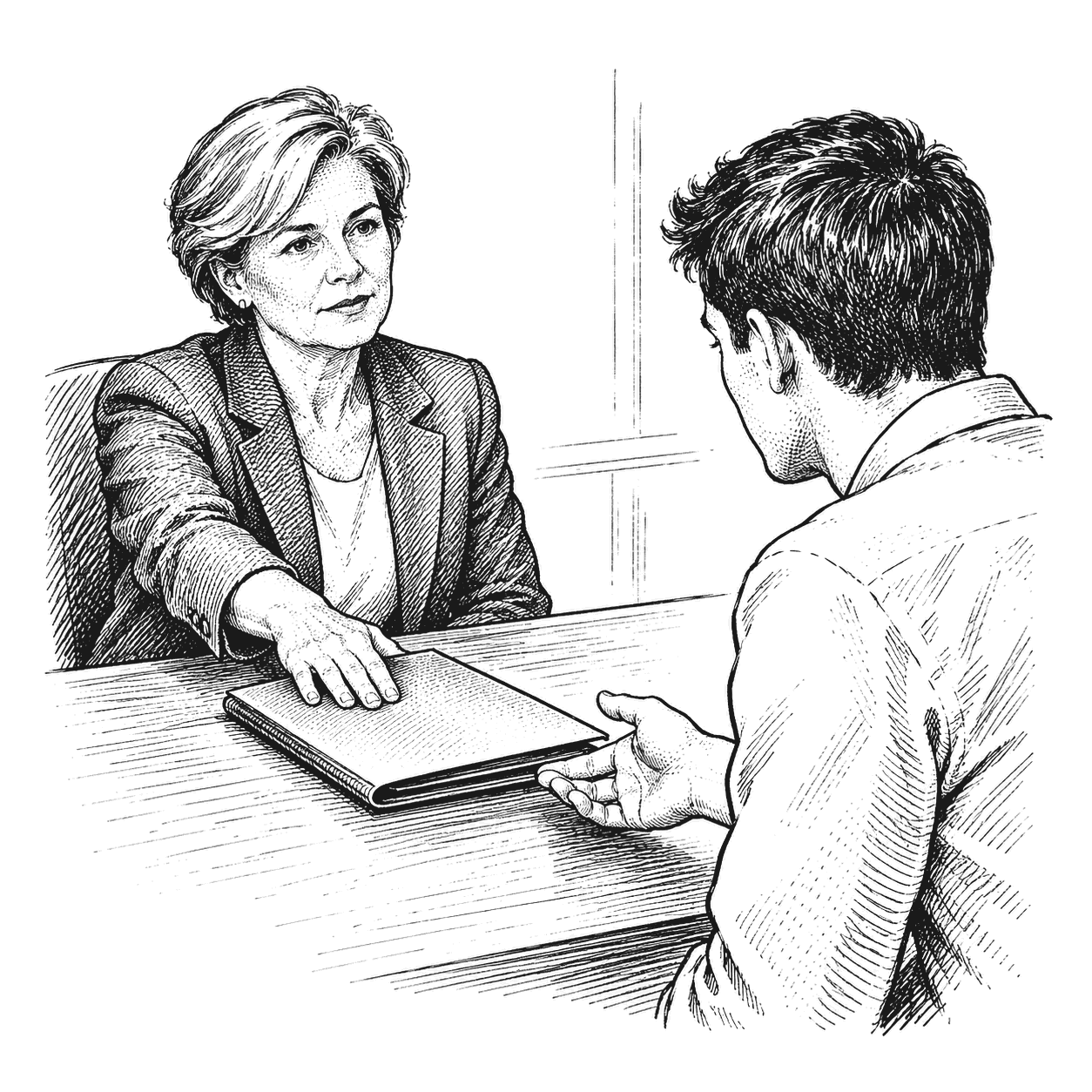
Don’t wait for full trust before you hand over room. The stronger pull ran from room to trust: leaders who gave their teams more say came to trust them more. Waiting until you fully trust a new associate before letting them lead a client meeting may have the order backward.
Say out loud that you rely on the team. Leaders’ trust was measured with statements like ‘I can rely on my team.’ Telling the family that your associate will lead the next quarterly review turns that trust into room the associate can use.
The bottom line
In German teams surveyed three times a month apart, leaders trusted teams that led themselves more a month later, and leaders who trusted their teams went on to give them more room to decide. The pull ran more strongly the other way: leaders who gave their teams room came to trust them more.
The Trust Times is a running collection of independent, peer-reviewed research on how trust is built. Each issue distills a handful of studies into plain language, with a practical note on what it means in practice.