Saying
It First
Our previous issue was about the trust a client walks in with. This one is about what you say before anybody asks you for it. Three studies, three moments: the first contact, in the event of bad news, and the notice you send afterward.
The first, from Nature Communications. Researchers sent officers on foot patrol to approach people at random. Half of them opened with a plain line about what they were doing there: walking the beat, getting to know the neighborhood. The people contacted that way came away surer the officer meant them well, and less threatened, than the ones approached in silence.
The second, from PNAS Nexus, asked Americans how far they trusted Arizona’s election results. Learning that a race had taken six days to call cost the state a good deal of that trust. Playing a short video first, in which an official explains that an accurate count is slow, gave most of it back. It also lifted the people who were never told about any delay.
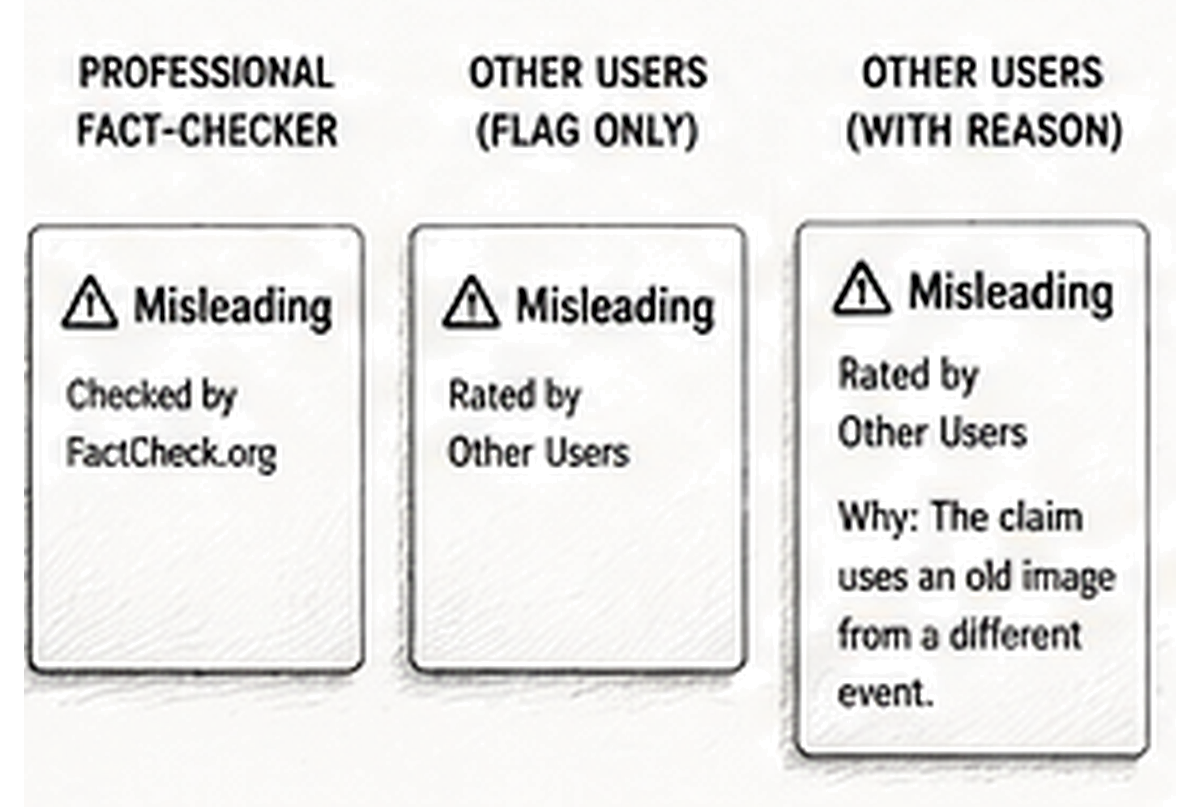
The third showed readers a misleading social media post with one of three warnings attached to it. A professional fact-checker’s flag beat the same flag attributed to other users. A note from those same users, spelling out why the post was misleading, beat them both. The credential lost to the specifics.
I picked these three because the thing doing the work is the same in each, and it is not authority. It is a reason, offered before the other person has to go looking for one. That’s something we can all do: say why you are calling, describe a challenging statement before it lands, and try not to send a notification without a sentence that explains it.
Three more great studies on trust next week.

Sources · Issue 7
About This Issue
Three peer-reviewed studies on how trust is built, retold in plain language. The “at your desk” sections are our editorial application, not claims made by the researchers.
What a client hears before they ask for it: the line that opens a first meeting, the warning that arrives ahead of the bad news, and the reason that has to travel with the notice.
In our previous issue we covered three studies on the trust a client brings through the door.
Saying Why You Are There Lowers the Threat People Feel
Officers on foot patrol opened with one plain sentence about what they were doing. The strangers they approached came away less wary, and surer the officer meant them well.
Dobson, K. S. H., Dittmann, A. G., & Yeager, D. S. (2025). A transparency statement improves trust in community-police interactions. Nature Communications, 16(1), Article 2285. Open access: doi:10.1038/s41467-024-55709-6
A man is walking toward you on the sidewalk. He is in uniform, he is armed, and he has decided to talk to you. In the two seconds before he speaks, you are running one calculation: is this going to end badly?
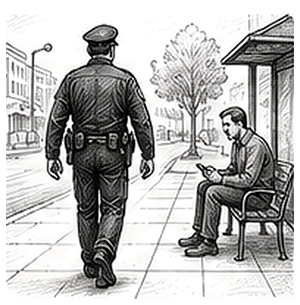
Kyle Dobson spent more than five hundred hours watching that calculation happen. He and his colleagues followed officers around a mid-sized American city, watching people brace, and noticing what a small number of officers did differently.
Those officers opened by explaining themselves. Not a greeting, not a question, just a sentence about what they were doing on that street: walking the beat, getting to know the neighborhood.
The experiment
The researchers turned that habit into an instruction. Officers on foot patrol approached members of the public as they normally would, and a coin toss decided whether the officer led with the line or skipped it. The line was short and it was true. “I’m just out and about walking around, talking to people in the community.” “I’m out here on foot patrol, just trying to get to know my beat.”
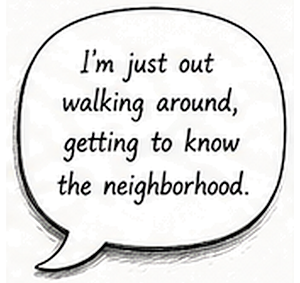
That is the whole intervention. No training program, no policy, no equipment. One sentence, spoken first, sharing a harmless purpose out loud.
The researchers ran 232 of these encounters. Afterward, each person approached rated the encounter: how threatened they had felt, and how much they believed the officer cared about their welfare and would help them if they needed it.
Because a street experiment is a hard place to control anything, the team ran the whole thing again on video with a nationally representative sample of 969 Americans, and then five more times online to work out why it worked.
What they found
The people who heard the simple explanation rated the officer’s good intentions at 5.66 on a seven point scale. The people who did not rated the same thing at 5.30.
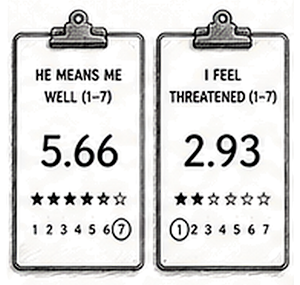
On threat, the gap ran the other way and slightly wider. People who heard the line rated their sense of threat at 2.93. People who did not rated it at 3.41.
These are not enormous numbers, and the researchers do not dress them up as any. What is remarkable is how simple it is. The gap was bought with about three seconds of speech, from officers who were going to walk up and start talking anyway.
The video study reproduced both effects with a national sample. So did the online experiments, run five different ways.
Then the team went looking for the boundary, and found something more useful than the main result.
Where it stops working
In one experiment, 349 people were told they were about to interact either with a police officer or with a grocery store worker. Both versions of the stranger could open with a transparency line or not.

With the officer, the line did what it had done all along. With the grocery store worker it did nothing at all. The threat reduction came in at 0.03, which is to say zero, and roughly twenty times smaller than the officer’s effect.
The authors’ reading is that the sentence is not politeness and it is not warmth. It is an answer to a specific unasked question, and the question is only live when the other party holds power over you. A grocery clerk cannot detain you, so there is nothing to disambiguate. An officer can, so the silence in the first two seconds is doing damage, and a plain statement of purpose is what stops it.
That is worth sitting with, because it decides who this study is about.
What This Means at Your Desk
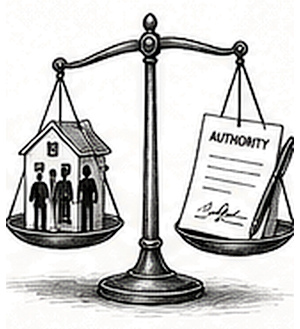
You are the one with the power in the room. You hold the money, you know what the fee schedule really costs, and you can see things about a family’s position that the family cannot. That asymmetry is precisely the condition under which the study says an unexplained approach costs you something.
Say why you are calling, in the first sentence. Not “do you have a minute,” which starts the calculation rather than ending it. “I’m calling because your bond fund made a distribution and I want you to hear the number from me.” The point is that the reason arrives before the client has to ask for one.
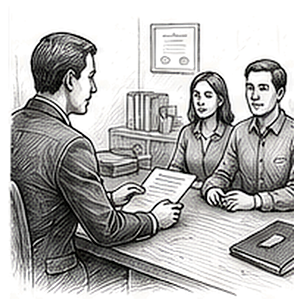
Put a face on the interaction before the agenda. The mechanism here is a stranger with power becoming a person with a purpose. A camera turned on, a name signed to the note, a bio page with a real photograph on it: all cheap versions of the same move.
The bottom line
The officers who said why they were there got a better hearing than the ones who did not, for the price of one sentence. You are further along than they are. Your clients came to you on purpose. But you are still, in the moments that matter, the stranger holding something of theirs, and the sentence still costs nothing.
Explaining the Process Raised Trust Even When Nothing Had Gone Wrong
A six day vote count cost Arizona officials six points of public trust. A forty second video, played beforehand, returned most of it, and raised everyone else along the way.
Lockhart, M., Gaudette, J., Hill, S. J., Kousser, T., Romero, M., & Uribe, L. (2024). Voters distrust delayed election results, but a prebunking message inoculates against distrust. PNAS Nexus, 3(10), pgae414. Open access: doi:10.1093/pnasnexus/pgae414
On election night in 2022, Arizona’s governor’s race did not get called. It did not get called the next day either, or the day after that. Six days passed between the polls closing and the winner being named, and in the space where the answer should have been, other explanations moved in.
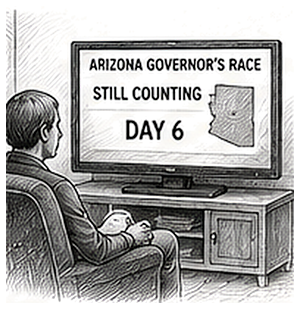
Nothing had gone wrong. Arizona counts a large number of mail ballots that arrive on election day, and each one has to have its signature checked before it can be opened. The process was working exactly as designed. It was just slow, and nobody had told anyone it would be.
A team of political scientists wanted to know two things: what that silence cost, and whether forty seconds of warning could buy any of it back.
The experiment
They put the question to nearly 10,000 Americans, most of them living nowhere near Arizona, in a nationally representative sample plus targeted samples from Georgia, Colorado, Texas and Los Angeles.
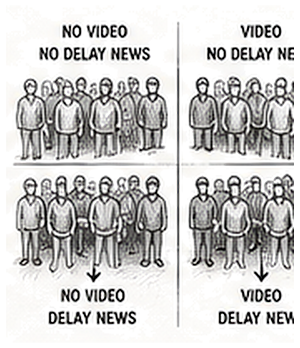
Every respondent got two coin tosses. The first decided whether they watched a forty second video before anything else happened. The second decided whether they were then told a plain fact: that the 2022 Arizona governor’s race had taken six days to call.
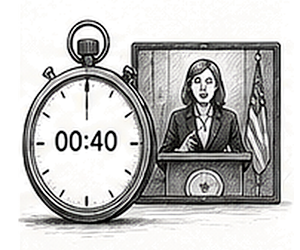
The video was not made for the study. It was a real public service announcement from the Arizona Secretary of State, produced for the primaries, in which an official explains that accurate results take time, says why the counting is careful, and points viewers to a page with more detail.
Then everyone answered the same question: how much do you trust election results in the state of Arizona?
What they found
Start with the silence. Among people who were told nothing beforehand, 66.7 percent said they trusted Arizona’s results. Among people told about the six day count, 60.2 percent did.
That is what the delay cost: six and a half points of trust, purchased by a fact that reflects a careful process working correctly.
Now the video. Among people who watched it and were then told about the delay, 64.1 percent said they trusted the results. Most of the loss was gone.
The obvious reading is that the video inoculated people against the bad news. The fourth group says it’s not so simple.
People who watched the video and were never told about any delay came in at 69.1 percent, higher than the 66.7 percent of people who saw nothing and heard nothing.
The video did not work by defusing a specific piece of bad news. It raised trust in the group that had bad news to absorb and in the group that had none, by about the same amount. The authors report no reliable interaction between the two treatments.
Why that distinction matters
If the video only worked as a shield, you would deploy it the way you deploy a crisis statement: when something is about to look bad. That is a strategy with a narrow window and a whiff of spin, and clients are good at smelling it.
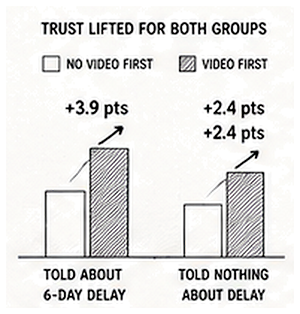
What the data describe is duller and far more usable. An official explaining how the work actually gets done raised confidence in the work, and the presence or absence of a problem barely changed that.
The delay was still expensive. Republicans, who had been told for two years that slow counts are suspicious, dropped 9.6 points on hearing about it, against 3.6 for everyone else. The same group gained the most from the video, 7.5 points.
The message was not persuasion, and it did not argue with anybody. It described a procedure.
What This Means at Your Desk
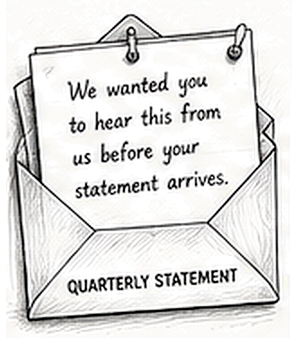
Warn people about the ugly statement before it arrives. A tax lot sale, a rebalancing bill, a quarter where the hedge did its job and looked questionably necessary doing it. If the client’s first encounter with the number is the statement, you have handed the explaining job to a document that cannot explain.
Describe your slow parts while nothing is wrong. Why a transfer takes three weeks, why you will not act on the first day of a drawdown, why performance reporting lands when it lands. This is the part most firms skip, because on a calm Tuesday it feels like there is nothing to say.
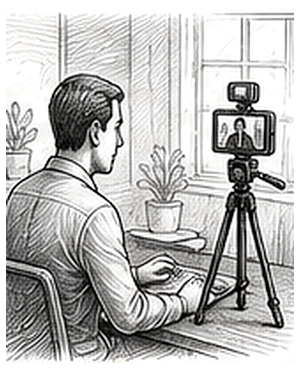
Do not wait for a reason to explain yourself. That is the finding, plainly stated. The group with no crisis in front of them still trusted more after forty seconds of process description than the group left alone.
The bottom line
The delay cost the officials six points. The forty seconds cost them nothing, and it worked even when nothing had happened yet. Most firms have that messaging in them already, but are waiting for a bad quarter to record it.
A Warning with a Reason Beat a Warning with a Credential
Three ways to flag a misleading post in front of 1,810 people. The one that said why the post was misleading was rated the most trustworthy, and the label alone was worth less than nothing.
Drolsbach, C. P., Solovev, K., & Pröllochs, N. (2024). Community notes increase trust in fact-checking on social media. PNAS Nexus, 3(7), pgae217. Open access: doi:10.1093/pnasnexus/pgae217
You know the label. A post online makes a claim, and underneath it sits a box telling you the claim is disputed. Sometimes the box comes from the platform’s fact-checking partner. On X, it now usually comes from other users, through the program called Community Notes.
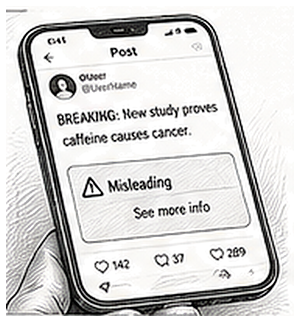
The obvious question about that program is whether anybody believes random people in a crowd. Professional fact-checkers have credentials, editorial standards, and a reputation to protect. Volunteers on the internet have none of those things.
Three researchers in Germany ran the comparison, and the answer turned out to be about something other than who was talking.
The experiment
They recruited 1,810 Americans, balanced by political preference, and showed each of them real social media posts. Some of the posts were genuinely misleading, and those ones came with a warning attached.
Which warning depended on the group. One group saw a flag from a professional fact-checker. A second saw the same flag, attributed to other users. A third saw a community note: the same judgment, plus a written explanation of why the post was misleading, the way the notes actually appear on X.
A fourth group got no fact-check at all.
Everyone rated how trustworthy they found the fact-check, on a scale the researchers scaled to run from zero to one.
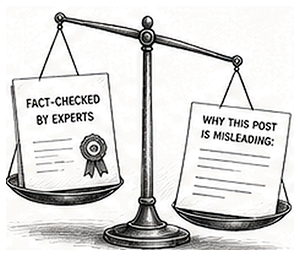
The design isolates two things that usually travel together: the authority of whoever is speaking, and the substance of what they say.
What they found
The professional fact-checker’s flag scored 0.59. The same flag from other users scored 0.57, slightly but reliably worse. On the credential question alone, then, the crowd loses.
The community note, from those same non-experts, scored 0.63.
So the crowd’s bare label scored below the expert’s, and its explained label scored above. What moved the rating was not the badge on the warning but whether it gave a reason. Isolated, the explanation was worth five points. I think this sounds obvious in retrospect but it’s powerful to see numbers attached to it.
What This Could Mean at Your Desk
The study is about a warning label on a website, but the shape transfers: someone weighing a notice, with a credential on one side and an explanation on the other.
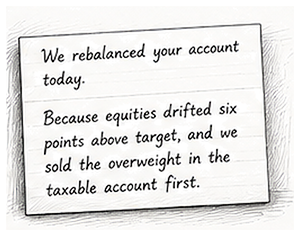
Give every notice its own because. “We rebalanced your account” is a bare flag. “We rebalanced because equities drifted six points above target, and we sold the overweight in the taxable account first” is a note. The second takes ten seconds longer.
Send the reason with the action, not behind it. A client who has already asked why has already spent a day wondering. In the study, the note arrived attached to the thing it explained.
The takeaway. Being right is a credential. Saying why is a note. This issue is about the sentence that comes first, and this is the cheapest one in it: a because, attached to whatever you were sending anyway.
LIVE ZOOM WEBINAR · AUGUST 28, 2026
60 MINUTES · 11:00 AM PT / 2:00 PM ET
Our first Humanity Labs Ask Me Anything was a smashing success, filled with sharp questions and honest answers. This time, come see it live, in person. Submit your questions in the registration and don’t hold back. You’ll get nothing but unvarnished Andrei in return.
