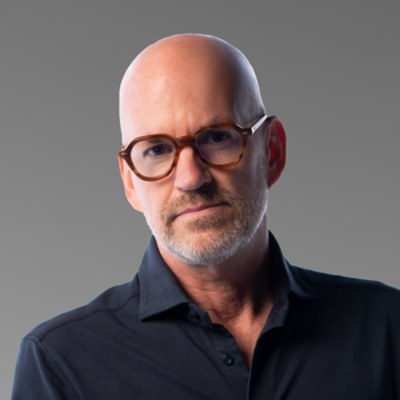
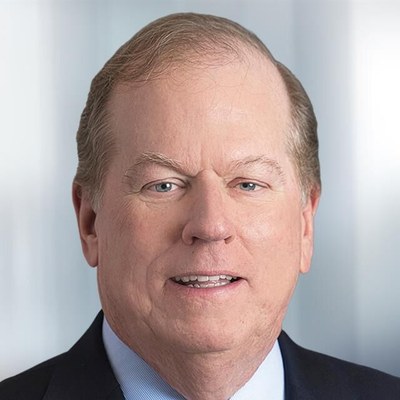
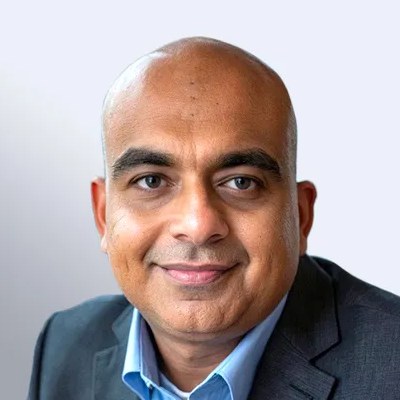
Spending on technology is at a record, but the money is going to AI infrastructure while the people-based services these firms sell shrink. In the Americas, contract value for managed services fell 6% in the third quarter of 2026 while cloud deals doubled, and the largest contact-center company took a $1.05 billion write-down. Eight leaders on our list, from a $16 billion reseller to a translation company, are answering by building their own AI, buying products, and reshaping their firms.
The short version
Four kinds of firm sell people's time in different units: resellers and IT services, engineering and analytics, contact centers, and translation. AI makes every unit cheaper. More
Clients spend record sums on AI infrastructure and less on people. Managed-services contracts fell 6% in the Americas in Q3 2026, and US call center jobs fell 38% from 2017 to 2025. More
Five changes mark the innovators: building their own AI, owning products instead of renting out people, splitting the firm, pricing for results, and reshaping the talent pyramid. More
Eight leaders on our list are already doing this, and four more outside it are making similar moves. Each profile ends with a question to ask. More
Advisers, software makers, and purchasing programs stand between firms and clients. Washington is buying more software direct. More
What they own, how they price it, and how juniors learn get these leaders talking. Calling a reseller a box pusher, or translation dead, marks an outsider. More
How the business works
Four kinds of firm sell people's time by the hour, the seat, or the word
The leaders on our list run four kinds of business that outsiders often lump together as "IT services" or "outsourcing." They share one feature: most of their revenue is a markup on people's time, sold by the hour, the agent seat, or the word, and AI makes each of those units cheaper.
Sub-sector
What the client buys
How it's priced
Gross margin at a public peer
Leaders on our list
IT services and resellers
Hardware, software licenses, and cloud subscriptions, plus design, setup, managed services, and contract IT staff
A markup on products, plus project fees, monthly managed-service fees, and hourly staffing rates
21.7% at CDW and 21.4% at Insight in 2025 CDWInsight
Thai Lee (SHI), Anil Sharma (22nd Century), D. Raja (CEI)
Engineering and analytics services
Custom software, data platforms, analytics, and AI models
Hourly (time and materials) or fixed price; some subscriptions and outcome deals
About 29% at EPAM in 2025 (revenue less cost of revenue) EPAM
Staffed customer service, sales, tech support, and content moderation
Per agent or per hour; increasingly per transaction or per result
About 35% at Concentrix in its third quarter of 2026 Concentrix
Anthony Marlowe (MCI)
Translation and localization
Translation, adapting products for new markets, interpreting, dubbing, and data for training AI
Per word; per minute for interpreting; moving to hourly and platform fees
43.4% at RWS in its 2025 year, down from 46.9% RWS
Phil Shawe (TransPerfect), Paul Carr (Welo Global)
Margins are gross profit as a share of revenue at the largest public company in each sub-sector; private firms don't publish theirs.
Resellers earn a thin markup and chase services
A value-added reseller buys hardware and software from makers like Microsoft, Cisco, and Dell, usually through a distributor, and resells it with its own design, setup, and support. SHI, founder-owned and run by Thai Lee, reports $16 billion in yearly sales and more than 7,000 staff. IT Channel Oxygen Insight, a public reseller, saw sales fall 5% in 2025 while its gross margin hit a record, because services earn more than boxes. Insight
Engineering, contact-center, and language firms sell people's time
Engineering firms such as DataArt and MathCo staff projects with engineers and analysts, many in Eastern Europe, Latin America, or India, and bill by the hour or by the project. Contact-center outsourcers price per agent or per hour. Translation companies route work through freelance linguists and price per word: 91% of language companies still do, by the count of Slator, a language-industry research firm. Slator The language business is the most fragmented of the four: the ten largest firms hold 9.9% of a $72.6 billion market, according to the research firm Nimdzi. Nimdzi
The economics in 2026
Clients spend record sums on AI infrastructure and less on the people these firms sell
-6%change in Americas managed-services contract value, Q3 2026, while cloud deals doubledsource
$1.05Bgoodwill write-down at Concentrix, the largest contact-center firm, in Q3 2026source
38%drop in US call center jobs from 2017 to 2025source
75%price cuts some translation buyers now expect from AI, says Nimdzisource
Notable change
AI infrastructure deals doubled while people-based services shrank
The research firm Information Services Group (ISG) counts large outsourcing contracts every quarter. In the third quarter of 2026, contract value in the Americas hit a record $27.5 billion, up 61%, but almost all of it was cloud and AI infrastructure. Managed services, the work done by people under multi-year contracts, fell 6%, and outsourced business processes fell 6%. ISG via Business Wire
Clients are renegotiating more than they're buying: new-scope contract value fell to a nearly three-year low while restructured deals hit a record. ISG says enterprises now use managed services "as a cost lever to fund AI." ISG via Business Wire
So what: Clients are taking money out of the services these firms sell to pay for AI. Ask a leader which of their service lines are being renegotiated, and which are growing.
The government's monthly jobs count shows the same turn. Employment at firms that design and run computer systems grew through the pandemic, peaked in March 2023, and has fallen since.
IT services firms employ 128,000 fewer people than at their March 2023 peak
So what: Jobs in computer systems design grew fast through the pandemic, peaked four months after ChatGPT arrived, and have drifted down since. Ask a leader whether their own headcount has followed the same line, and what they now sell instead of hours.
People employed in computer systems design and related services, seasonally adjusted
Monthly employment in computer systems design and related services (NAICS 5415), which covers custom programming, systems integration, and IT management firms, from the Bureau of Labor Statistics' Current Employment Statistics survey, seasonally adjusted. The latest two months are preliminary. Hover for each month; click or tap for details.Show as a table
US call centers employed 34% fewer people in 2025 than in 2019
So what: US call center jobs have fallen every year since 2017. Programming jobs grew until 2023 and have slipped since. The work in both is moving from people billed by the hour or the seat to software, so ask a leader how they price work that now needs fewer people.
People employed at US telephone call centers (thousands)
People employed in custom computer programming services (millions)
Annual averages of monthly, not seasonally adjusted figures from the Bureau of Labor Statistics' Current Employment Statistics survey. Call centers are NAICS 56142, which counts US workers at call center firms, not their staff abroad. Programming is NAICS 541511, the largest part of IT services. The government publishes no comparable yearly series for translation firms. Sources are in the table.Show as a table
Clients want AI's savings in the price. Indian IT firms' clients are asking for 25% to 30% lower prices for the same work, Reuters reported in August 2026. The Star (Reuters) Concentrix's CEO says the company is "aggressively disrupting our own traditional business." Concentrix
Washington is changing who can do the work. The president extended a $100,000 fee on new H-1B visa petitions to September 2027, but courts have blocked its collection while the government appeals. Fragomen The Federal Communications Commission (FCC) has proposed capping the share of calls telecom companies send offshore. Federal Register
Federal buyers are going direct. The General Services Administration (GSA) now negotiates government-wide deals with software makers through its OneGov program and asked resellers in January 2026 to justify their markups. FedScoop Wiley
What is changing
IT, outsourcing, and language firms are changing how the work gets done in five ways
The biggest shift is what these firms own. A firm that rents out people's time earns less when AI does more of the work. The leaders furthest along are building or buying the software that does the work, and changing their firms' shape to sell it.
From 2023 to 2026, the firms changing most are doing one or more of five things. The first three match the three groups of leaders on our list, and each cuts across all four kinds of firm.
1. Building their own AI
Firms are building their own AI platforms and running delivery through them, instead of selling people who use other companies' tools. DataArt committed $100 million over three years in June 2025 and launched Artisyn, its AI delivery platform, in 2026; Welo Global built Opal, an AI translation platform. Outside our list, BairesDev's founder handed the CEO job in August 2026 to the co-founder of an AI training company it had bought, to speed its "AI-first services model." Pulse 2.0
On our list: Eugene Goland, Sayandeb Banerjee, D. Raja.
2. Owning products instead of renting out people
Resellers and staffing-style firms are buying software, labs, and managed services so they own more of the result. World Wide Technology, a founder-owned reseller, closed its purchase of Softchoice in March 2025. Business Wire Insight Global, a staffing firm, launched IG Labs as its "AI services and products arm" and plans more than 1,700 full-time hires in 2026. Insight Global
On our list: Thai Lee, Anil Sharma.
3. Splitting and reshaping the firm
Owners are changing the company's structure as well as its tools: separating an AI business from a human one, or reorganizing around client segments. MCI spun out an AI customer-service division in November 2025, and Welo Global reorganized into five client-segment businesses. CGS, a 40-year-old New York firm, split into four companies in July 2025, so its outsourcing and AI training businesses now stand on their own. Channel Insider
On our list: Phil Shawe, Anthony Marlowe, Paul Carr.
4. Pricing for results instead of hours, seats, or words
Firms are starting to charge per result instead of per person. Reuters reported that about 80% of business-process contracts at Tata Consultancy Services (TCS) are now priced on outcomes, roughly double the share in late 2023. The Star (Reuters) Translation lags: 91% of language companies still price per word. Slator
5. Reshaping the talent pyramid
AI absorbs the junior work that service firms used to staff with large classes of graduates. Firms are replacing that base with smaller teams and engineers embedded at client sites, known as forward-deployed engineers. Accenture and Google Cloud announced a 1,000-person unit of them in September 2026. The Next Web MathCo is creating more than 2,000 specialized AI roles, including forward-deployed engineers. MathCo
The innovators
Eight leaders on our list are rebuilding firms that sell people's time
Eight IT, outsourcing, and language leaders are among The Originals. Most run firms their founders still control, and each has made a dated, costly change to how the work is done. The highest scorers are Phil Shawe of TransPerfect (7.0), Eugene Goland of DataArt (6.8), and Thai Lee of SHI (6.1).
20 of these 24 dated moves came in 2023 or later
So what: Most of these leaders made their biggest bets after generative AI arrived in late 2022, and several came in 2026 alone. The results are still coming in, so asking what has paid off, and what hasn't, is a natural way to open a conversation.
Building their own AIOwning products instead of renting out peopleSplitting and reshaping the firm
Each dot is one costly change to how the work is done. Click a dot for a short summary and a link to the story.Show as a table
Year
Leader
Move
Source
2019
Anthony Marlowe
Buys shuttered ServiCom center, rehires staff as Sydney Call Centre
Co-founder and CEO, DataArt · New York; software engineering firm founded in 1997 with more than 6,000 people in 20+ countries; outside investors, including FTV Capital, hold minority stakes
Eugene committed $100 million over three years to data and AI in June 2025, aiming to put AI tools in every employee's hands. In February 2026 he launched Artisyn, which DataArt calls its AI-enabled operating model for delivery. He also bought ACL Tech in Chile in 2025, adding more than 500 people. DataArt
“We're not just updating our offerings. We're reshaping how we deliver, how we grow, and how we support our people and our clients through the next phase of this industry.” source
Ask aboutWho keeps the gain when Artisyn makes a team faster: the client, through lower prices, or DataArt, as margin.
Co-founder and CEO, MathCo · Chicago; analytics and AI services firm founded in 2016, with most of its staff in India
Sayandeb moved MathCo to what it calls an AI-native model in September 2026, creating more than 2,000 specialized AI roles, including forward-deployed engineers who work inside client businesses. The new model builds on MathCo's own platform, NucliOS. MathCo
“Transforming into an AI-native organization is about fundamentally rethinking how businesses operate, solve problems, and create using AI.” source
Ask aboutWhen a forward-deployed engineer replaces a team of analysts, whether the client still pays for effort or for decisions.
Co-founder and Chairman, CEI · Pittsburgh; IT services firm founded in 1992 as Computer Enterprises, Inc.; Sunil Senan has been its CEO since April 2026
Raja repositioned CEI from traditional IT services to building and running AI systems in March 2026, moving it to the cei.ai name and hiring new sales and marketing chiefs. Nine days later he handed the CEO job to Sunil Senan, who had led data, analytics, and AI at Infosys. CEI
“Incremental change was never going to be sufficient for our clients or for us.” source
Ask aboutWhich decisions he kept as chairman, and what would tell him the AI-first bet hasn't worked.
President and CEO, SHI International · Somerset, New Jersey; founder-owned IT reseller with $16 billion in 2025 revenue and more than 7,000 people; she has led it since 1989
Thai is moving SHI from reselling licenses to delivering AI programs. She launched Stratascale, a consulting unit for the largest accounts, in late 2020, bought the Indian managed-services firm Locuz in 2024, opened AI & Cyber Labs in New Jersey in April 2025, and invested in the AI engineering firm NStarX in October 2025. IT Channel Oxygen
“The introduction of SHI's AI & Cyber Labs will empower many organizations to bring both clarity and speed to their AI efforts, helping them identify use cases with strong ROI and the best way to achieve the shortest time to value,” source
Ask aboutHow SHI is changing what its sellers are paid for, so they sell lab and AI work as well as the next renewal.
CEO, 22nd Century Technologies · McLean, Virginia; federal IT services firm with more than 6,000 people; he says it has grown from $6 million to $600 million in revenue
Anil is turning a firm that billed for people into one that also owns products. He bought QED, a public-safety software maker used by 340 agencies, in 2023, added the treasury-software specialist TreasurySoft in 2024, and in January 2026 bought BT Group's US federal arm, now the subsidiary 22nd Century Networks. Washington Technology
“This acquisition is a strategic pivot towards building and growing a product-centric organization that complements our existing services,” source
Ask aboutThree years after QED, what share of profit comes from software the firm owns rather than billable people.
President and Co-CEO, TransPerfect · New York; co-founded in 1992 and owned by him since a 2018 buyout; the largest language company by revenue, $1.32 billion in 2025
Phil is moving TransPerfect beyond translation. In 2025 he made ten acquisitions, including Technicolor's games unit, MPC's and The Mill's French studios, and the language-AI company Unbabel. Language services fell below half of revenue for the first time. Slator He says he would rather cannibalize the firm's own translation work with AI than let a rival do it. Slator
“Technicolor is a renowned brand and this division has an impressive track record of producing stunning creative work.” source
Ask aboutWhich business he had to shrink fastest as AI took on more translation work, and where those people went.
CEO, Welo Global · New York; localization company, formerly Welocalize, with more than 2,000 clients and a network of linguists
Paul reorganized Welocalize around client segments, each run by a general manager with its own delivery, product, and technology teams. In April 2026 he relaunched it as Welo Global, the parent of five brands including Welo Data and Welo Life Sciences. In December 2025 he agreed to build the firm's agentic AI platform, Opal, into the translation software maker Phrase. Marketing Dive
“A single brand built around localization no longer reflects our business or our direction.” source
Ask aboutWhat he took away from the central delivery team to give each general manager real control, and what that cost in efficiency.
Founder and CEO, MCI · Manalapan, Florida; contact-center outsourcer founded in 2003 with more than 4,000 people; he controls it through his own investment company
Anthony split MCI in two in November 2025: a human outsourcing business, MCI BPO, and an AI-native division, AiCX.com, that sells AI agents and small language models. He hired a former Federal Emergency Management Agency executive, Mark Misczak, as president to run the split. Before that he grew by buying contact centers others had closed, rehiring their staff. MCI
Ask aboutHow he keeps AiCX and MCI BPO from fighting over the same client, and who decides when a human seat gets replaced.
Four leaders outside the list are making similar moves
Each of these four leaders has made a change worth asking about.
Nacho De Marco
Co-founder and Chairman, BairesDev · Nearshore software engineering firm with more than 4,000 people across Latin America; privately held by its founding shareholders, with no outside capital
Nacho handed the CEO job in August 2026 to Darren Shimkus, co-founder of Modal, an AI training company BairesDev bought in 2025, to speed the move to an "AI-first services model."
“We just had one of our best half-years in the company's history, and that's exactly why we're making this change now.” source
Ask aboutWhat a founder sees at the top of a good year that made him hand over the CEO job, and what Darren Shimkus is changing first.
Jim Kavanaugh
Co-founder and CEO, World Wide Technology · St. Louis; founder-owned IT reseller and integrator, co-founded in 1990 with David Steward; likely more than 10,000 people
Jim closed World Wide Technology's purchase of the Canadian reseller Softchoice in March 2025. He has told other chief executives not to mislead employees about what AI will do to their jobs. Business Wire NBC Connecticut
“everybody should be a student of AI and tech and not be afraid of it.” source
Ask aboutWhat World Wide Technology tells its own staff about which jobs AI will change, and how that's different from what it tells clients.
Bert Bean
CEO, Insight Global · Atlanta area; staffing and services firm founded in 2001, with about 40,000 full-time and contract employees
Bert launched IG Labs, the firm's AI services and products arm, and in July 2026 said Insight Global would make more than 1,700 full-time hires in 2026 to meet AI demand. Insight Global
“You can't outsource transformation to software. You need people who know how to build and run it.” source
Ask aboutWhat IG Labs sells that a staffing contract couldn't, and how it's priced.
Phil Friedman
Founder and Executive Chairman, CGS · New York; founded Computer Generated Solutions in 1984; software, training, and contact-center outsourcing
Phil split CGS into four independent companies in July 2025, with separate businesses for outsourcing and for AI and immersive training, and chairs each of them. Channel Insider
“With the help of our new board members, each of these new businesses will sharpen their focus and agility” source
Ask aboutWhat the outsourcing business can do on its own that it couldn't inside CGS.
The wider field
Public giants and AI start-ups set the prices these firms compete against
A few large firms and fast-growing software companies shape what the leaders above can charge. They set the going price for engineers, agents, and words.
Large firms
Concentrix The largest US-listed contact-center outsourcer; revenue fell in Q3 2026 and it wrote down $1.05 billion of goodwill.
Globant A public engineering firm whose headcount fell from 30,084 to 27,411 in a year as it sells AI subscriptions.
RWS The largest public translation company; revenue fell 4% in its 2025 year and staff fell from 8,059 to 7,649.
Propio An interpreting company backed by private equity that bought its rival CyraCom in 2025.
Companies selling the tools
Sierra Sells AI customer-service agents and charges only when a problem is resolved; reached $100 million in annual revenue in under two years.
Decagon AI customer-service agents; raised $131 million at a $1.5 billion valuation in June 2025.
Cognition Makes Devin, an AI software engineer; raised $400 million at a $10.2 billion valuation in September 2025.
DeepL Machine translation used by many corporate buyers; launched an AI agent in September 2025.
How clients find a firm
Advisers, software makers, and purchasing programs stand between these firms and their clients
Notable change
Washington buys software direct and questions resellers' markups
Through its OneGov program, the GSA now negotiates government-wide prices directly with software makers. Its leaders say "We're not anti-reseller. We're anti-fragmentation," and most OneGov deals still run through resellers. FedScoop
In January 2026 the GSA asked resellers on its IT schedule to explain the value they add and hinted at limits on markups; by August its focus had moved to making service pricing visible. Wiley Washington Technology
So what: Federal resellers like SHI and 22nd Century earn more from the services wrapped around a license than from the license. Ask how much of their federal margin would survive if the government bought every license direct.
In these businesses the client rarely finds a firm on its own. Large buyers hire sourcing advisers to run the contest; software makers decide which resellers get the best prices; and public buyers buy through contracts that charge the seller a fee on every sale. The map shows who pays whom.
0.75%of sales a contractor pays GSA on its schedule, built into the pricesource
6.6%gross margin at Ingram Micro, a distributor between makers and resellers, Q2 2026source
$1Ma year in cloud sales a partner now needs to bill Microsoft directly, up from $300,000source
0.5%Amazon Web Services (AWS) Marketplace fee on services deals since June 2026, down from 2.5%source
The firm pays four of the seven channels between it and the client
So what: The channels that cost a firm most are the ones that push its prices down: sourcing advisers run contests between outsourcers, and staffing programs make suppliers compete on rate. The fees a firm pays directly are a few percent of each sale. Ask a leader how much of their work is won without an adviser or a purchasing program in the middle.
The firm pays the channel a fee or a share of each saleThe firm pays no fee; the client pays, or the channel pays the firm
ClientA company, a hospital, a bank, a software maker, or a government agency
→
Sourcing advisersNo fee from the firm
ISG, Everest Group, and similar firms
A large client hires the adviser to run a contest between outsourcers and negotiate terms.
No fee from the firm; the client pays, and advised deals tend to be priced lower. Horses for Sources
Software makers' partner programsNo fee from the firm
Microsoft, Cisco, Dell, and AWS
The maker pays resellers discounts, rebates, and marketing money, and sets who may bill it directly.
No fee; the maker pays the firm, but direct Microsoft billing needs $1 million a year in cloud sales. TechPartner News
DistributorsFirm pays
TD SYNNEX, Ingram Micro, and Pax8
The distributor buys from makers and sells to resellers, adding credit, delivery, and cloud marketplaces.
A spread of about 6.6% to 7% of sales, the distributors' gross margin. Ingram Micro
Cloud marketplacesFirm pays
AWS Marketplace and similar stores
The client buys a firm's software or services through its cloud account, using money already committed to the cloud company.
0.5% on services deals and 1.5% to 3% on software. CRN Australia
Government purchasing programsFirm pays
GSA schedules, NASPO ValuePoint, Sourcewell
A public buyer orders from a contract that has already been competed, instead of running its own tender.
0.75% of sales on GSA schedules; 0% to 0.25% at NASPO; more at some cooperatives. GSA
Staffing programsFirm pays
Managed service providers using SAP Fieldglass or Beeline
A company buys IT contractors through a program manager, which sends each request to approved suppliers.
About 2% of every billed hour, often paid by the supplier. NC Department of IT
Larger language companiesNo fee from the firm
The largest translation companies, which hand work down to smaller ones and freelancers
A big language company wins the client and subcontracts the translation, often three or four levels deep.
No fee; the larger company keeps the gap between the client's rate and the rate it pays. Nimdzi
→
FirmThe reseller, engineering firm, contact center, or translation company that does the work
Fee levels come from government pages, contract documents, company filings, and trade press; several channels don't publish rates. Each links to its source.Show as a table
Channel
Examples
Does the firm pay?
What it costs the firm
Source
Sourcing advisers
ISG, Everest Group, and similar firms
No
No fee from the firm; the client pays, and advised deals tend to be priced lower
Microsoft said in 2019 that almost all of its commercial cloud revenue, about 95%, was sold through partners. GeekWire Since October 2025, a partner needs $1 million a year in cloud sales to bill Microsoft directly, which pushes smaller ones to buy through distributors such as Pax8, TD SYNNEX, and Ingram Micro. TechPartner News Amazon Web Services cut its marketplace fee on consulting deals to 0.5% in June 2026, so clients can pay a services firm out of money they've already committed to AWS. CRN Australia
Purchasing programs charge the seller, not the buyer
Public buyers save time by buying from contracts someone else has already competed. The seller pays a fee on every sale, built into the price:
Program
Year
What the seller pays
GSA Multiple Award Schedule
2004, current
0.75% of sales, unless the contract says otherwise. GSA
NASPO ValuePoint (state cooperative contracts)
Current
0% to 0.25% of sales, and states may add their own fee. NASPO ValuePoint
Sourcewell (cooperative contracts for local government)
Current
A fee the seller proposes, built into price; 7.5% in one solicitation. Sourcewell
North Carolina IT staffing program
Current
Staffing suppliers pay the program's manager 1.96% of billings. NC DIT
Microsoft Cloud Solution Provider program
Oct 2025
Direct billing requires $1 million a year in cloud sales; distributors need $30 million per region. TechPartner News
AWS Marketplace
2024; June 2026
1.5% to 3% on software; 0.5% on services deals, down from 2.5%. AWSCRN Australia
Advisers and staffing programs squeeze the price
Big outsourcing contracts are often run by sourcing advisers such as ISG and Everest Group, paid by the buyer. Provider executives have long said they prefer deals without an adviser, because advisers push prices down and standardize terms. Horses for Sources Companies that hire many IT contractors buy them through a managed service provider and its software, and the supplier often pays a fee of about 2% on every billed hour. Beeline
Four leaders run the main channels
Scott Chasin and Patrick Zammit run two of the distributors between software makers and resellers. Michael Connors and Jimit Arora run the two sourcing advisers most often hired when large clients pick an outsourcer.
Scott Chasin
CEO, Pax8 · Denver; privately held cloud marketplace that sells Microsoft and other software to more than 47,000 IT partners serving small businesses
Scott runs the distributor most small IT firms now buy Microsoft cloud through, especially since Microsoft raised the bar for billing it directly in October 2025. In 2026 Pax8 started selling AI agents through its marketplace and calls its partners "Managed Intelligence Providers."
“With SMBs spending $777 billion on IT services every year, the opportunity ahead for our community is massive.” source
Ask aboutWhich kinds of IT firms are winning with AI agents on Pax8, and which are losing customers to them.
Patrick Zammit
CEO, TD SYNNEX · Public distributor of hardware and software to resellers; CEO since September 2024 after leading its European business
Patrick runs one of the two largest distributors between makers and resellers, at a gross margin of about 7%. Its fastest growth comes from building servers for the largest cloud companies.
“Hardware is becoming a very interesting category again and could be poised for very interesting growth,” source
Ask aboutHow much of a reseller's margin he expects to come from AI hardware over the next two years.
Michael P. Connors
Chairman and CEO, ISG (Information Services Group) · Public sourcing adviser that founded the ISG Index of outsourcing contracts; he founded ISG in 2006
Michael leads the adviser many large companies hire to pick and manage outsourcers. In early 2026 ISG signed the largest contract in its history, up to $17 million to manage $300 million of one client's technology spending across 200 vendors. ISG
Ask aboutWhether ISG earns more now from running contests between outsourcers or from managing them after the deal.
Jimit Arora
CEO, Everest Group · Dallas; privately held research and sourcing adviser; CEO since February 2025, after 20 years at the firm
Jimit leads the firm whose rankings of outsourcers many buyers use to draw up a shortlist. In August 2026 he told Reuters how clients were pressing Indian IT firms on price.
“It's a desperate market for the service providers. The odds are very much in favour of clients.” source
Ask aboutWhat a mid-size, founder-owned firm has to show to make an Everest shortlist against the giants.
Trade-offs
Six trade-offs divide the IT, outsourcing, and language leaders you'll meet
Most leaders on our list have picked a side on several of these. In our reading, asking which side they picked, and why, gets to their strategy faster than asking about trends.
1Build your own AI or resell someone else's
DataArt committed $100 million over three years to data and AI and built its own delivery platform, Artisyn.
Pax8 is setting up resellers to sell AI agents from Microsoft and others, as "Managed Intelligence Providers." Pax8
AskWhat's the one piece of AI a client would pay you for that they couldn't buy from Microsoft?
2Pass AI's savings to clients or keep them
Phil Shawe says TransPerfect believes in "cannibalizing ourselves" even when revenue falls in the short term. Slator
Clients are asking Indian IT firms for 25% to 30% lower prices for the same work, Reuters reported. The Star (Reuters)
AskWhen a client asks for the AI savings, how do you decide what to give back?
3Bill by the hour or by the result
About 80% of TCS's business-process contracts are now priced on outcomes. The Star (Reuters)
91% of language companies still price per word. Slator
AskWhich contract have you moved off hourly or per-word pricing, and what did you have to learn to price the risk?
4Hire graduates or hire fewer, more senior people
Insight Global plans more than 1,700 full-time hires in 2026, betting that clients need "people who know how to build and run it." Insight Global
Globant's headcount fell from 30,084 to 27,411 in a year as it sells AI subscriptions. Globant
AskHow is a 23-year-old in your firm learning the work that AI now does?
5Deliver from the US or from abroad
The FCC has proposed capping how many calls telecom companies send offshore, and a Senate bill would penalize firms that move call centers abroad. Federal Register Congress.gov
A $100,000 H-1B fee would make US staffing costlier, though courts have blocked it while the government appeals. Fragomen
AskIf both rules stick, where do you put your next 500 people?
6Stay independent or sell to private equity
BairesDev says it is "privately held by its founding shareholders" and has never raised outside capital. Pulse 2.0
Buyers are busy: 64 managed-service providers were bought in the first quarter of 2026, up 73%, and outside investors backed 80% of the deals. Channel Dive
AskWhat would have to be true for you to stay independent for another ten years?
Before a first conversation
These leaders want to talk about pricing, people, and what they own
Leaders across all four businesses face the same question from clients: if AI does part of the work, why pay the old price? Jimit Arora told Reuters in August 2026: "It's a desperate market for the service providers. The odds are very much in favour of clients." The Star (Reuters) The leaders on our list talk about three things: what to own instead of hours, how to price it, and how to train people when AI does the junior work.
Six mistakes mark an outsider
Calling a reseller a "box pusher." The large resellers earn their margin on services and managed contracts; Insight's gross margin hit a record in 2025 as its sales fell. Insight
Saying translation is dead. In Slator's 2025 review, 74% of corporate buyers reported stable or rising demand, though the work is moving to machine translation with human review, interpreting, and AI data. Slator
Assuming outsourcing means offshore. Outsourcers hold about 15% of US contact-center agent jobs, and US site openings continue. ContactBabel via NICE Site Selection
Predicting that AI will replace their agents next year. Site Selection reports that "the most visible near-term impact is agent augmentation, not agent replacement." Site Selection What they're rebuilding makes a better opening.
Assuming record AI spending means IT services are booming. The boom is in infrastructure; in the Americas, managed services fell 6% in Q3 2026. ISG via Business Wire
Stating the H-1B fee as settled. It's in active litigation and changes month to month.
Ten questions get these leaders talking about the work
ISG's numbers show managed services shrinking while AI infrastructure doubles. Which of your service lines look like the first, and which like the second?
When a client asks for AI's savings to be passed through, how do you decide what to give back and what to keep?
Which contracts have you moved off hourly, per-seat, or per-word pricing, and what did you learn about pricing the risk?
What does your staffing pyramid look like now compared with three years ago?
How are new hires learning the work that juniors used to learn on the job?
What does your own AI platform do that a client couldn't get by buying a license from Microsoft or OpenAI?
If you split the AI business from the people business, which one would you run yourself?
How has the H-1B fee fight changed your plans for where to hire?
What do you measure now that you didn't measure two years ago?
What do you wish your largest client understood about how you make money?
Where they gather
Seven events bring these leaders together before June 2027
Resellers gather at Microsoft's and Amazon's partner events and at channel shows; contact-center leaders at Customer Contact Week (CCW); localization leaders at LocWorld.