Through September 2025, private equity and the firms it backs made more acquisitions of US design firms than employee-owned firms did, putting 2025 on track to be the first year they led. The employee-owned share of the 100 largest firms has fallen from 74% to 58% since 2017. At the same time, AI is starting to shrink the hours these firms bill. Seven leaders on our list, most running firms their employees own, are answering with their own AI, new digital businesses, and contracts paid for results rather than drawings.
The short version
Design firms sell expert hours, and employees own many of the largest. Public clients choose them on qualifications, then negotiate the fee. More
Engineers are busy, but architects are waiting. Engineering firms report a year of backlog, while architecture billings have shrunk in most months since October 2022. More
Five changes mark the innovators: designing with AI, building data and digital businesses, selling outcomes instead of drawings, rolling up smaller firms, and specializing in data centers, power, and water. More
Seven design firm leaders on our list are already making these changes, and three more outside it are making similar moves. Each profile ends with a question to ask. More
Clients pick on qualifications, and firms pay to stay visible and insurable. More public work now goes to builders who hire their own designers. More
Ask who keeps the hours AI saves, and who will own the firm next. Don't assume they compete on price or ask if they'd sell. More
How the business works
Employees own many of the largest design firms, which sell expert hours to clients who hire on qualifications
About 1.73 million people worked in US architecture, engineering, and related services in 2025, up 26% since 2014, according to the Bureau of Labor Statistics. BLS The 500 largest design firms ranked by the trade weekly Engineering News-Record (ENR) took in $158.7 billion in 2025, up 7.4%, and ENR credits much of the growth to infrastructure for AI. ENR
The leaders on our list run several different kinds of design firm, which outsiders often lump together. The table shows the main types.
Type of firm
What it does
Examples (ENR 2026 rank)
Architecture and interiors
Designs buildings and interiors, billed mostly by design phase
Most public work goes to the best-qualified firm, not the cheapest
Under the federal Brooks Act and similar laws in most states, a public agency ranks design firms on their qualifications, then negotiates a fee with the top-ranked firm, and moves to the next only if talks fail. Cornell LII ACEC Firms bill most work by the hour at rates marked up over salary, and they track utilization (the share of hours billed to clients) and the multiplier (revenue per dollar of salary charged to projects).
Employees own many of the largest firms, but buyers are closing in
Burns & McDonnell, HDR, and Terracon each say they're 100% employee-owned. Burns & McDonnell HDR Terracon But private equity firms and the firms they back made 47% of US design-firm acquisitions in the first three quarters of 2025, against 45% for employee-owned buyers, according to the deal adviser Morrissey Goodale. One in four of ENR's top 100 design firms is now backed by private equity, up from 4% in 2017. ACEC A record 512 deals closed in the US in 2025. Consulting-Specifying Engineer
The economics in 2026
Engineers are busy while architects wait for projects to start
$158.7Brevenue of ENR's 500 largest design firms in 2025, up 7.4%source
12 mo.median backlog at engineering firms in the third-quarter 2026 survey by the American Council of Engineering Companies (ACEC)source
47%of 2025 design-firm acquisitions made by private equity and the firms it backssource
16.7%operating profit on net revenue at architecture and engineering (A&E) firms in Deltek's 2026 studysource
Notable change
Private equity has overtaken employee-owned firms as a buyer of design firms
Employee-owned firms made 80% of design-firm acquisitions in 2016 and 50% in 2024. In 2025, private equity and the firms it backs pulled ahead, with 47% of deals through September. The employee-owned share of ENR's top 100 fell to 58%. ACEC
Perkins&Will's CEO, Phil Harrison, told Bisnow that private equity's arrival has pushed up prices. In September 2025, 12% of commercial architecture firms told the American Institute of Architects (AIA) that they were considering a sale, up from 6% in 2018. Bisnow
So what: The leaders on our list mostly run employee-owned firms that are buying, not selling. Ask what they tell their employee-owners when a buyer calls.
The AIA and the software company Deltek survey architecture firms each month on their billings. The chart shows the longest slump in the index's history.
Architecture firms' billings have shrunk in 42 of the 47 months since October 2022
So what: Inquiries about new projects have mostly stayed above 50 while billings stayed below it, so architects are talking to clients about work that isn't turning into signed projects. Engineering firms are busier: they rate data centers and water as their strongest markets. Ask a leader which side of that split the firm sits on, and what it's doing about the other.
Billings indexInquiries index (new project inquiries)
The American Institute of Architects (AIA) and Deltek survey architecture firms each month; a reading above 50 means more firms reported rising billings than falling ones. First-published values, from AIA's releases or, for earlier months, coverage quoting them. Inquiries are shown where a source gave them. Hover for each month; click or tap for details.Show as a table
Architecture and engineering firms added 353,000 jobs from 2014 to 2025, a 26% rise
So what: The industry kept growing through the architecture slump, and openings across professional services have fallen 42% since their 2022 peak. The shortage now is narrower: 96% of engineering firms in ACEC's latest survey have jobs that require a professional engineer's license. Ask a leader how AI changes the way junior staff learn the judgment those licenses require.
People employed in architecture and engineering services (millions)
Job openings across professional and business services (millions)
Annual averages of monthly, not seasonally adjusted figures from the Bureau of Labor Statistics. Employment covers architectural, engineering, and related services. Openings cover all professional and business services, a much wider group that includes A&E firms, because the openings survey doesn't break out A&E. Sources are in the table.Show as a table
AI is starting to cut the hours firms sell. In ACEC's research, firm leaders said the work that has traditionally built engineers' judgment, "running calculations, checking drawings, researching standards, preparing documentation," is the work AI is best placed to absorb. ACEC More than half of engineering firms are investing in staff dedicated to AI. ACEC
Federal transportation money is on a short extension. Congress extended the 2021 infrastructure law's programs only to December 11, 2026. CRS The extension left out the law's advance funding for many transportation programs, according to the National Association of Counties. NACo
Liability costs are rising. 73% of the 15 insurers Ames & Gough surveyed plan rate increases in 2026, 60% saw bigger claims in 2025, and 80% say clients' contract terms now affect whether a firm is insurable. Ames & Gough
What is changing
Design firms are changing in five ways, starting with what they sell
The biggest shift is what firms sell. A firm that sells hours at a multiple of salary earns less when AI cuts the hours, so leaders are testing fixed fees, digital products, and contracts tied to results. ACEC's research arm says fixed-fee contracts leave firms "better positioning to leverage artificial intelligence." ACEC
From 2023 to 2026, the firms changing most are doing one or more of five things. The first three match the three groups of leaders on our list.
1. Designing with AI
Firms are moving AI from pilots to firmwide tools, with rules and a named leader. Gensler uses AI in some way on most of the roughly 3,000 projects it handles a year, and trained more than 3,000 staff on one image tool in four days. Business Insider SSOE rolled out Microsoft Copilot to all staff in 2024. SSOE Salas O'Brien's staff submitted nearly 600 ideas to its Project AI in 2025. Salas O'Brien
On our list: Jordan Goldstein, Vince DiPofi, Darin Anderson.
2. Building data and digital businesses
Some firms run separate software and data companies whose income doesn't depend on hours. CDM Smith launched Trinnex, a software subsidiary, in 2022 and doubled its resources in 2026. GlobeNewswire Terracon bought the location-data company Pivvot in 2021. PR Newswire
On our list: Gayle Packer, Tim Wall.
3. Selling outcomes, not drawings
A few firms sell design, construction, operation, and financing as one package, or long advisory relationships instead of one set of drawings. Woodard & Curran formed an Integrated Solutions Division in January 2026 and already runs more than 90 water facilities for clients. Woodard & Curran CannonDesign buys consultancies to turn three-year projects into 30-year client relationships. Bisnow
On our list: Alyson Watson, Brad Lukanic.
4. Rolling up smaller firms
Employee-owned firms are buying too. Salas O'Brien says it has merged with more than 40 firms in ten years, and Terracon's purchase of The Transtec Group in 2025 was its 26th since 2017. Salas O'Brien Terracon Others sold: Morgan Stanley Capital Partners took a majority of Olsson, a 2,000-person engineering firm, in January 2026. Business Wire
5. Specializing in data centers, power, and water
Engineering firms rated data centers (+83) and water (+82) their strongest markets in the summer of 2026. ACEC Firms are buying the skills: STV bought the utility power engineering firm CHAMPS in September 2026. Business Insider
The innovators
Seven design firm leaders on our list are rebuilding how their firms work
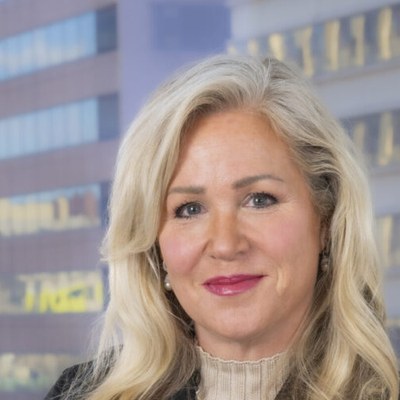
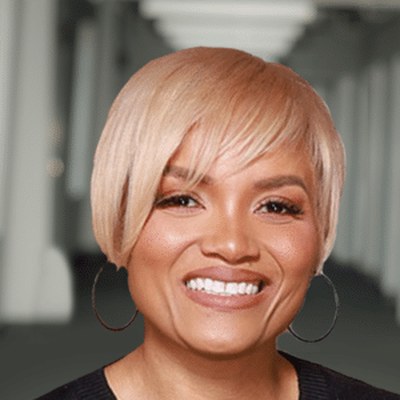
Seven architecture and engineering leaders are among The Originals. Most run firms their employees own, and each has made a dated, costly change to how the work is done. The highest scorers are Jordan Goldstein of Gensler (6.7), Vince DiPofi of SSOE (5.9), and Gayle Packer of Terracon (5.8).
18 of these 22 dated moves came in 2023 or later
So what: Most of these leaders made their biggest changes in the last three years, as AI tools arrived and buyers started calling. Asking what has paid off so far, and what hasn't, is a natural way to open a conversation.
Designing with AIBuilding data and digital businessesSelling outcomes, not drawings
Each dot is one costly change to how the work is done. Click a dot for a short summary and a link to the story.Show as a table
Year
Leader
Move
Source
2019
Brad Lukanic
Buys Blue Cottage to sell healthcare strategy beyond design
Co-CEO, Gensler · San Francisco; the largest US architecture firm by revenue, with about 6,000 professionals
Jordan has put AI into most of Gensler's roughly 3,000 projects a year through generative tools, several now built into the firm's own interface. Gensler ranked among Fast Company's most innovative companies in 2024 for an algorithm that tests whether office buildings can become housing.
“What we've found is that AI really helps bring more ideas into the process and enables teams to explore their ideas more effectively.” source
Ask aboutWhich parts of a Gensler project AI has changed most, and how the firm prices work that now takes fewer hours.
CEO, SSOE Group · Toledo, Ohio; about 1,500 employees in the US, Mexico, and India; CEO since 2019, with Greg Brogley named CEO-elect in October 2026
Vince made AI a central part of SSOE's strategy in 2022, setting up data rules and an AI governance team, then rolled out Microsoft Copilot to all staff in 2024. In 2025 the firm's own developers piloted a tool to forecast staffing for new projects. He hands day-to-day leadership to Greg Brogley in January 2027.
“First and foremost, we established data ethics and privacy protocols, which are governed by our Board of Directors.” source
Ask aboutWhat he's handing Greg Brogley on AI that he wishes he'd had in 2022, and who to talk to now: him or his successor.
Chairman and CEO, Salas O'Brien · Irvine, California; more than 5,100 people; more than 95% of staff are owners, and Blackstone holds a minority stake
Darin launched Project AI in 2025, collecting nearly 600 ideas from staff and funding the best into tools for design markups, commissioning, and proposals. In June 2026 he named a senior vice president of data and AI. He has grown the firm through more than 40 mergers in ten years, selling a minority stake to Blackstone in 2024 to help fund them.
“AI helps us learn faster, design smarter, and deliver solutions that truly raise the bar for our company and clients, while keeping the innovation, care, and excellence that define our work.” source
Ask aboutHow Salas O'Brien keeps employee ownership meaningful with an outside investor, and which Project AI tools are now used on every job.
Chair, President, and CEO, Terracon · Olathe, Kansas; employee-owned engineering, testing, and consulting firm with more than 8,000 people
Gayle is moving Terracon from field testing toward data products. It bought the location-data firm Pivvot in 2021, created growth and technology roles in 2023, named a national manager of AI and data science in 2025, and made its 26th acquisition since 2017.
“The organizational and leadership changes we're making will enable us to grow and transform how we meet changing market dynamics going forward.” source
Ask aboutWhat clients pay Terracon for data that they used to get only as a test report.
Chairman and CEO, CDM Smith · Boston; employee-owned water, environmental, and infrastructure engineering firm with 7,000 employees
Tim launched Trinnex, a software and digital strategy subsidiary, in 2022, and in February 2026 doubled its resources by moving CDM Smith's mapping and asset management team into it. Trinnex now sells six software products to water utilities.
CEO and Chair, Woodard & Curran · Portland, Maine; employee-owned water and environmental firm with more than 1,300 employees; CEO since 2021
Alyson formed an Integrated Solutions Division in January 2026 to sell design, technology, construction, operation, and financing as one package, calling it one of the biggest organizational changes in the firm's history. The firm already runs more than 90 water facilities. In 2025 she opened share ownership to every employee after one year.
Ask aboutWhat a water utility buys from the Integrated Solutions Division that it couldn't buy from separate firms, and how the firm gets paid for results.
CEO, CannonDesign · Employee-owned architecture and consulting firm with about 1,600 people before buying Ennead; CEO since 2016
Brad is turning a design firm that held clients for one three-year project into one that keeps them for 30 years, by buying strategy and smart-building consultancies. In April 2026 he bought Ennead Architects, CannonDesign's seventh acquisition in about two years and its largest.
“We're thinking growth for differentiation.” source
Ask aboutWhat a client buys from CannonDesign in year ten of a relationship, and how the firm charges for it.
Three leaders outside the list are making similar moves
These leaders aren't on the list. Each has made a change worth asking about.
Rodney Chester
CEO and Board Chair, Gresham Smith · Nashville; architecture and engineering firm with $355 million in gross revenue and 27 offices, owned by its staff
Rodney added a chief digital transformation officer to his executive team in January 2026, and the firm has built its own assistant that bundles generative design tools. Business Wire
“AI only supplements the design journey that our professionals guide our clients through.” source
Ask aboutWhat the new digital transformation chief is meant to change in a project team's week.
Brad Strittmatter
CEO and Chairman, Olsson · Lincoln, Nebraska; more than 2,000 employees; founded 1956
Brad sold a majority of the employee-owned firm to Morgan Stanley Capital Partners in January 2026, with employees reinvesting.
“We chose MSCP because they align with our people-first culture and our commitment to meaningful employee ownership.” source
Ask aboutWhat employee ownership means at Olsson now, and what he'd tell an employee-owned firm weighing the same offer.
Brian led Freese and Nichols to a second Malcolm Baldrige National Quality Award in 2024, and in 2026 hired leaders to bring AI into project delivery. Freese and Nichols
“The rigorous Baldrige application process provided us with invaluable feedback that will help shape our future efforts and strengthen our role as sustainable partners for our colleagues and clients.” source
Ask aboutHow the firm's quality system decides where AI can be trusted in a design.
The wider field
Public consolidators and AI software makers set the pace design firms react to
A few of the largest firms and fast-growing vendors shape what the leaders above can do. They set the going price for acquisitions, staff, and software.
Large firms and buyers
AECOM A public consolidator whose long-term plan assumes AI gains and a move toward fixed-fee and value-based contracts.
Jacobs ENR's largest design firm; bought the rest of PA Consulting for about $1.6 billion in March 2026.
Stantec Bought the architecture firm Page, its main source of acquisition growth in 2026.
Companies selling the tools
Autodesk Makes Revit and the other design software most firms use; added AI agents across its products in September 2026.
Augmenta Builds AI that designs electrical systems; raised $10 million more in 2025.
Motif A cloud design platform from former Autodesk leaders; raised $46 million in early 2025.
How clients find a firm
Design firms pay for proposals, data, and insurance to reach clients who choose on qualifications
Notable change
More public work now goes to builders who pick their own designers
States keep widening design-build, where one contract covers design and construction and a builder usually leads. In 2026 alone, Utah, Tennessee, Georgia, South Carolina, and Illinois widened or extended it; Georgia removed its cap on design-build highway projects. DBIA
On those jobs the design firm often works for the builder, not the owner, and insurers count design-build among the leading drivers of bigger claims. Insurance Business
So what: Ask a leader how much of the firm's work is won as the lead designer and how much as a builder's subconsultant, and whether that share is changing.
There are no referral fees in design. Public agencies choose on qualifications and then negotiate the fee. Cornell LII Private owners often hire an adviser to run the selection and pay it about 1% to 5% of construction cost. Mastt The design firm's own costs come from chasing work and staying insurable: proposals, project data, liability insurance, and, increasingly, design staff abroad.
45%median win rate on proposals at design firmssource
73%of design-firm liability insurers plan rate increases in 2026source
80%of those insurers say clients' contract terms affect whether a firm is insurablesource
512US design-firm acquisitions in 2025, a recordsource
Design firms pay four of the seven channels between them and the work
So what: The three channels that pick the firm (public agencies, owners' advisers, and builders leading design-build) charge it nothing. The firm pays to be seen and to be insurable: proposals, project data, liability insurance, and offshore help. Ask a leader how much of the firm's work is won as the lead designer and how much as a builder's subconsultant.
The design firm pays the channelThe design firm pays no fee
ClientA public agency, a company, a hospital, a developer, or a data center owner
→
Public clients choosing on qualificationsNo fee from the firm
Federal agencies, state transportation departments, water utilities, municipalities
The agency ranks firms on qualifications, then negotiates a fair fee with the top-ranked firm, so nobody is paid to get on the shortlist.
No channel fee; the firm bears pursuit cost, and the fee is negotiated after selection. Cornell LII
Owner's representatives and program managersNo fee from the firm
Owner-hired project and program managers
The owner hires the rep to run selection and manage the team, so the rep shapes which designers are invited.
Owner pays about 1% to 5% of construction cost; the design firm pays nothing directly. Mastt
Builders leading design-buildNo fee from the firm
General contractors leading design-build and progressive design-build pursuits
The contractor holds the prime contract and picks the design firm as its subconsultant before the owner selects a team.
No fee paid by the design firm; it gives up the prime role and takes on more design-build risk. DBIA
Proposals and marketingFirm pays
In-house principals and project managers, plus outside marketing consultants used by more than half of firms
Firms answer requests for qualifications and proposals and court repeat clients, with principals responsible and project managers doing most of the effort.
Median proposal win rate 45%; dollar cost per pursuit not published. Zweig Group
Lead and procurement dataFirm pays
Dodge Construction Network (Clearlake, STG), ConstructConnect (Roper Technologies), GovSpend
Firms subscribe to see projects early and to learn what public agencies buy, what they pay, and when contracts renew.
Dodge priced by quote based on data scope, geography, and users; others not published. Dodge Construction Network
Liability insurers and brokersFirm pays
Specialist brokers such as Ames & Gough and the A&E practices of large brokers, placing about 15 leading carriers
The broker places liability insurance and reviews contracts, because owners' contract terms now affect whether a firm is insurable.
73% of insurers plan 2026 rate increases, mostly up to 5%; premium as a share of revenue not published. Ames & Gough
Offshore and nearshore productionFirm pays
Embedded-team vendors such as WeCollabify
The firm rents dedicated drafters, 3D modelers, and engineers abroad at a fixed monthly rate instead of hiring locally.
Vendor says firms save 45% against $90,650 US total compensation for a mid-level designer or engineer. WeCollabify
→
Design firmThe architecture or engineering firm that gets the job
Fee levels come from laws, trade surveys, and providers' own pages; several providers don't publish prices. Each links to its source.Show as a table
Channel
Examples
Does the firm pay?
What it costs the firm
Source
Public clients choosing on qualifications
Federal agencies, state transportation departments, water utilities, municipalities
No
No channel fee; the firm bears pursuit cost, and the fee is negotiated after selection
Principals lead business development, but project managers do most of it
At 89% of firms, principals and owners are primarily responsible for winning work, but project managers do 59% of the effort, the design-firm consultancy Zweig Group found in 2026. Zweig Group The median firm won 45% of its proposals.
Insurers shape which contracts a firm can sign
Liability insurance is a design firm's main protection against claims that its design was wrong. Insurers now look closely at clauses that make a designer defend the client from the start of any claim, which the engineers' trade group calls uninsurable. ACEC A few states limit those clauses, and others are widening design-build:
State
Year
What it does
California
2017
Limits a designer's duty to defend and indemnify a public or private client to its own share of fault. STRUCTURE magazine
North Carolina
2019
Voids clauses that make designers defend or indemnify clients beyond their own fault. ACEC
Georgia
2026
Removes the cap on design-build highway projects, so builders lead more of the state's road work. DBIA
South Carolina
2026
Authorizes progressive design-build for the state transportation department. DBIA
Five leaders run the main channels
Linda Bauer Darr and Carole Wedge lead the two professional bodies. The three below them run the association for the people who write proposals, the main benchmarking and deal adviser, and a specialist insurance broker.
Linda leads the group that defends qualifications-based selection in Congress and the states, and whose research arm surveys engineering firms every quarter. With transportation programs extended only to December 2026, ACEC's members are watching the next highway bill.
“A shutdown has a detrimental impact across the economy, causing delays in the permitting and execution of critical infrastructure projects and hurting the clients and communities we serve.” source
Ask aboutWhat ACEC is telling member firms to plan for in their transportation work for 2027.
Carole Wedge
Executive Vice President and CEO, American Institute of Architects (AIA) · Washington; named CEO in September 2025 after 17 years as CEO of the architecture firm Shepley Bulfinch
Carole leads the architects' professional body, which publishes the billings index in this report, at a time when AI is lowering the cost of producing drawings. She has urged architects not to compete on price.
“Sometimes I worry that we're our own worst enemies when we think the answer to winning a project is to offer it for cheaper.” source
Ask aboutHow architects should keep clients from treating AI's savings as a reason to cut fees.
Marci runs the group that trains the people who write design firms' proposals, and in November 2026 it holds a summit on AI in that work.
“Our responsibility is not to assume the relationship will continue. It is to steward it in a way that gives people a reason to continue choosing it.” source
Ask aboutWhere members see AI changing which firms win work.
Chad Clinehens
President and CEO, Zweig Group · A consultancy that benchmarks design firms and advises on mergers and ownership transitions
Chad's firm publishes the fee and marketing benchmarks many design firm leaders use, and advises firms on selling or transferring ownership. Its 2026 data show firms refining hourly billing rather than leaving it.
“Marketing and business development are becoming more integrated, more data-driven, and more closely connected to firm strategy.” source
Ask aboutWhich way the firms he values are moving on pricing: tighter hourly rates or fixed fees.
Jared J. Maxwell
Vice President and Partner, Ames & Gough · Boston; partner at a specialist broker of liability insurance for architects and engineers
Jared's firm surveys the insurers that cover design firms each year; in 2026 most planned rate increases and flagged AI as a new risk.
“While AI can enhance efficiency, analytics and design optimization, its use must be supported by disciplined controls, transparency and accountability,” source
Ask aboutWhat a design firm can say about its AI controls at renewal that changes the premium.
Trade-offs
Six trade-offs divide the design firm leaders you'll meet
Most leaders on our list have picked a side on several of these trade-offs. In our reading, asking which side they picked, and why, gets to their strategy faster than asking about trends.
1Stay employee-owned or sell
CannonDesign stays owned by its architects and has made eight acquisitions in two years, including Ennead Architects. Bisnow
KGD Architecture sold to Signal Hill Equity Partners, a private equity firm making its third design-firm deal in eight months. Bisnow
AskIf a buyer offered a top price tomorrow, what would your employee-owners have to believe to say no?
2Refine hourly billing or move to fixed fees
Firms using salary-based billing multipliers rose from 18% to 30% in 2026, a sign they're tightening the hourly model. Zweig Group
ACEC's research arm says fixed-fee contracts position firms to keep the gains from AI. ACEC
AskOn which kinds of projects would you take a fixed fee tomorrow and keep the AI savings?
3Build your own AI or join a bigger firm
Brad Lukanic says CannonDesign launched its own generative AI tool. Bisnow
A co-founder of the design firm A+I said joining Perkins&Will made sense because AI is "better done with friends." Bisnow
AskWhat's the one AI capability that would make a client pick you, and do you own it or rent it?
4Chase data centers or spread the bet
Engineering firms rated data centers their strongest market in every ACEC survey of 2026, at +83 in the third quarter. ACEC
Texas paused new data center permits on September 21, 2026, pending audits of power and water demand. JD Supra
AskWhat share of next year's revenue could disappear if two big data center programs paused at once?
5Lead the design or work for the builder
States widened design-build in 2026, a method in which a builder usually holds the contract and hires the designer. DBIA
Insurers count design-build among the leading drivers of bigger claims against designers. Insurance Business
AskWhen you're a builder's subconsultant, who owns the client relationship?
In mid-2026, 33% of engineering firms said they'd turned down work for lack of staff in the previous six months, down from 51% at the end of 2024. BD+C
AskWhat did your last acquisition give you that you couldn't have hired in three years?
Before a first conversation
Design firm leaders want to talk about AI, pricing, and who owns the firm next
Engineering firms are confident about their own books and nervous about the economy: in ACEC's survey of 591 firms in the summer of 2026, the median backlog was 12 months, but more expected the US economy to weaken than strengthen. ACEC Architecture firms have had a longer, harder slump. Leaders in both talk about the same three things: what AI does to the hours they sell, how to train young staff when AI does the work they used to learn on, and who will own the firm next. ACEC
Six mistakes mark an outsider
Assuming design firms compete on price. Public work is bought on qualifications first, and Carole Wedge says architects who cut fees to win are "our own worst enemies." Architectural Record
Treating architects and engineers as one business. Their fees, licenses, and liability differ, and insurers see more severe claims against structural and civil engineers than against architects. Insurance Business
Saying AI will replace engineers. Most firm leaders in ACEC's research disagree; the risk they see is in governance, quality, and how juniors learn. ACEC
Asking whether they'd sell. In an employee-owned firm the CEO answers to the employee-owners. Ask how they think about ownership over the next decade.
Calling the firm a contractor. They're consultants, even when design-build puts them under a contractor.
Assuming all of construction is slow, or all of it is booming. Architecture billings have shrunk for three years while engineers report a year of backlog. Let the leader say where the firm sits.
Ten questions get a design firm leader talking about the work
If AI takes 30% of the hours out of a set of construction documents, who keeps that 30%: you, the client, or nobody?
Have you priced any work as a fixed fee because your teams got faster? What did clients say?
How are you teaching a second-year engineer judgment if AI is doing the calculations and drawing checks they used to learn on?
When a buyer backed by private equity calls, what's the honest reason you say no?
Can your next generation of owners afford to buy out the current one, and what's the plan if they can't?
Your peers report a year of backlog. Where is yours thickest, and which markets would you rather not be in next year?
Data centers are the hottest market and now the most political. How do you size that bet after the Texas permit pause?
Which contract clauses are you now walking away from?
Who decides which AI tools the firm uses, and who's accountable when an AI-assisted drawing is wrong?
What do you wish your largest client understood about how you make money?
Where they gather
Eight events bring these leaders together before June 2027
The ACEC convention draws engineering firm owners to Washington, and the AIA conference draws architects. The SMPS AI summit and ENR FutureTech draw the people changing how firms work.